

Casino Win Back Offers: 5 Messages Built to Pull You Back
Why casinos send win-back offers to lapsed players, the 5 messages built to pull you back, what regulators banned, and how to switch them off.
In this article
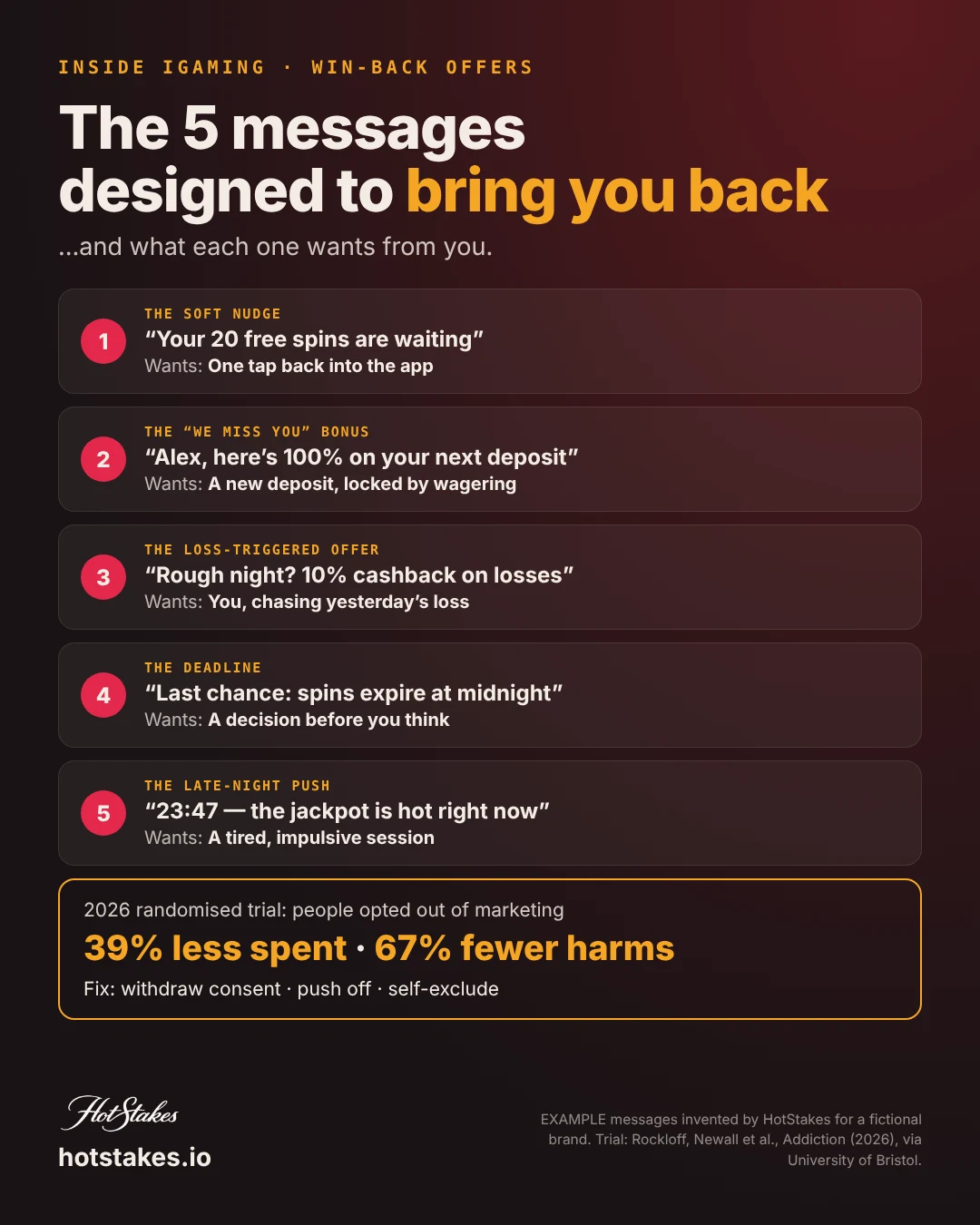
Casino win-back offers are automated messages sent to players who have gone quiet or lost heavily: free spins, “we miss you” bonuses, cashback on losses, countdown deadlines and late-night pushes. They arrive because software has moved you into a “dormant” or “at-risk” segment, not because anyone thinks you deserve a gift. In a 2026 randomised trial, people opted out of gambling direct marketing spent 39% less and reported 67% fewer short-term harms. Below: how the funnel works, the five messages it sends, what regulators found, and how to switch it all off.
Why do casinos keep emailing me? You are in a segment
Online casinos sort every player into lifecycle stages. The labels vary, but the logic does not.
We read two operator-facing playbooks on 21 Oct 2026, both written by marketing vendors for casinos. One, from tracking firm Track360, splits players into Active, At-risk, Dormant and Churned. Another, from email platform iPost, uses “cooling” for 30 to 60 days without play, “lapsed” for 61 to 120 days and “dormant” for 120 days or more.
The Track360 playbook lists the signals that push you down the ladder:
- Falling deposit frequency against your own usual pattern.
- Shorter or fewer sessions per week.
- Smaller bet sizes.
- Cashing out without depositing again.
- Ignoring messages you used to open.
Read that list again from the player’s side. Many of those signals are exactly what a person trying to cut back looks like.
To its credit, the same playbook says responsible-gambling breaks should not be targeted and calls marketing to a self-excluded player “a serious regulatory breach in licensed markets”. That filter only works if the player has told the casino, and if the casino is licensed somewhere that checks.
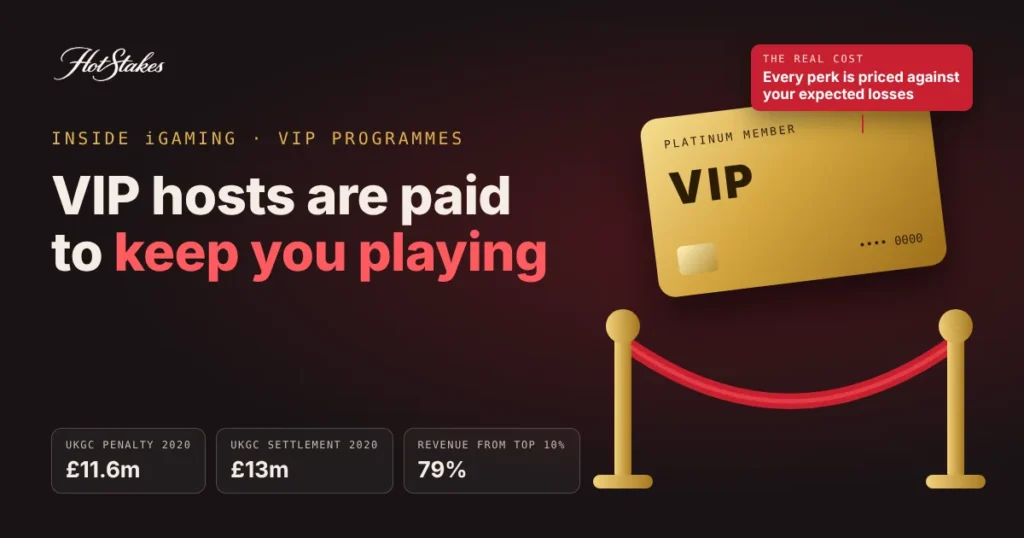
Your value to the casino also shapes the offer. iPost tells casinos to scale incentives to each player’s THEO, the theoretical amount the casino expects to win from them. Big spenders get a phone call from a casino VIP host; everyone else gets the automated version.
Takeaway: The “we miss you” email is triggered by your silence. Cutting back is the very behaviour that sets it off.
The reactivation funnel, Day 0 to Day 30
Neither playbook prescribes fixed dates, and both tell operators to calibrate to their own data. iPost recommends three or four emails over two to three weeks: a reminder, an offer, a deadline and an optional last call. Track360 recommends starting cheap and escalating. Put together, a typical sequence looks like this (illustrative timeline):
- Day 0: your last session. The clock starts.
- Day 3: a low-cost nudge: new games, a handful of free spins.
- Day 7: the personal “we miss you” email with a deposit bonus.
- Day 14: a bigger offer with a countdown attached.
- Day 30: the last call, and for high-value players a call from a host.
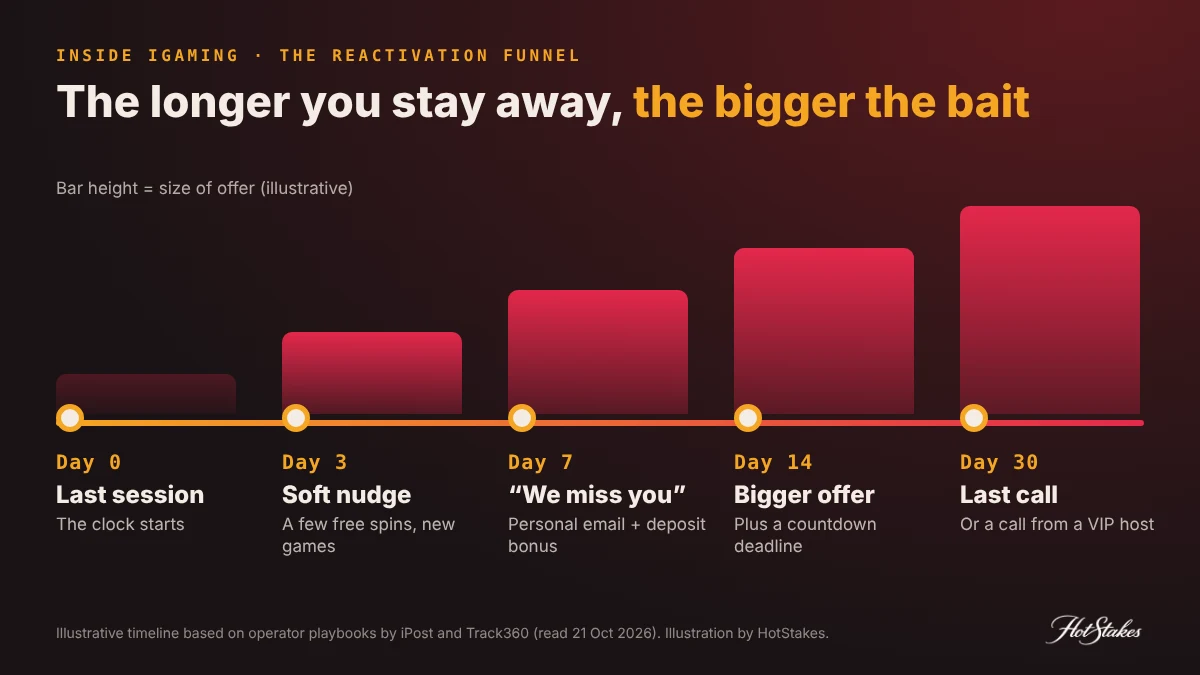
Track360 even warns operators about the side effect of rich offers: “Front-loading the biggest bonus teaches players that going dormant earns rewards.” In other words, the industry knows the offers train behaviour.
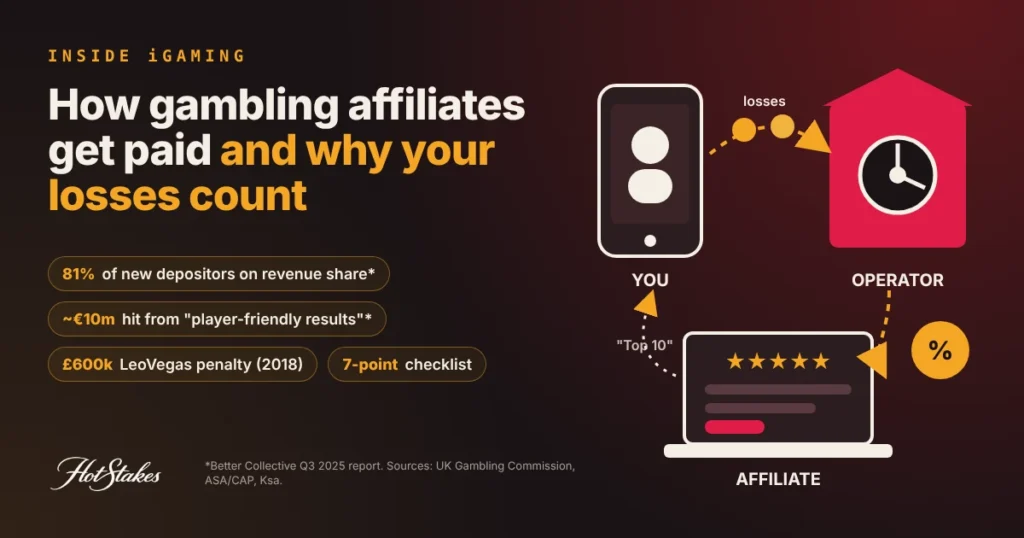
Who sends these messages is not always the casino. Affiliates paid on a share of player losses run their own email lists too, which we explain in how gambling affiliates make money.
Takeaway: The offers get bigger the longer you stay away. That is by design, not generosity.
The 5 win-back messages and what each one wants
The five messages below are examples written by HotStakes for an invented brand, “SampleCasino”. They copy the structure of common offers, not any real operator’s words.
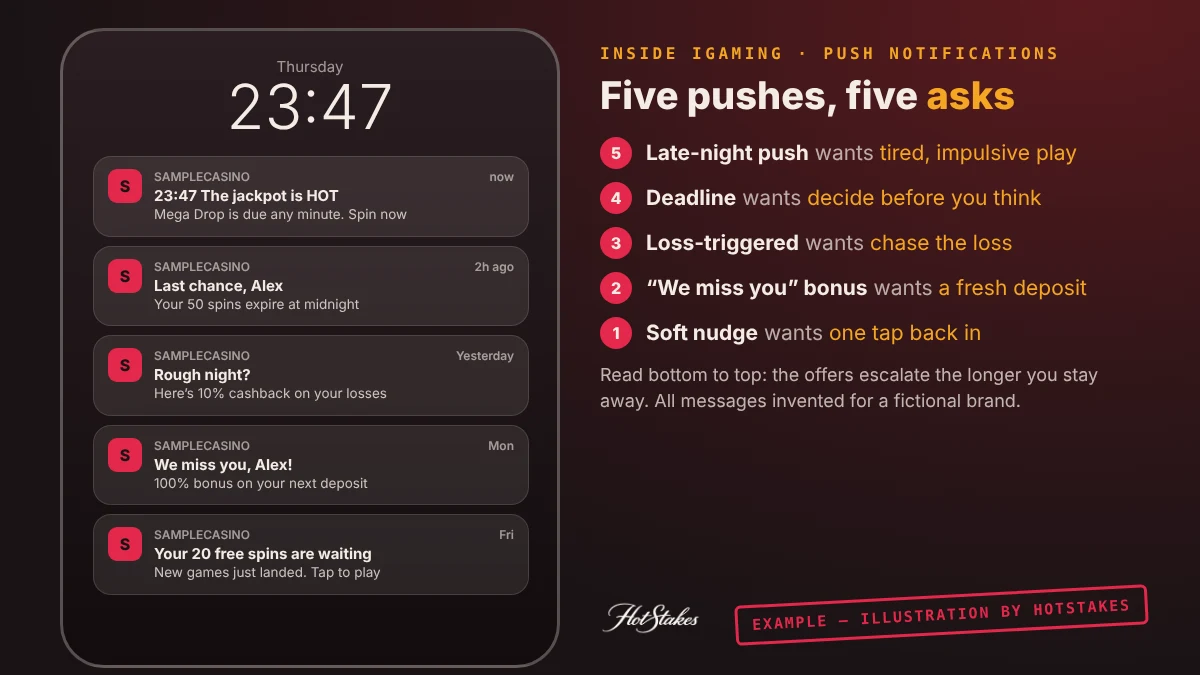
1. The soft nudge: “Your 20 free spins are waiting”
Cheap to send, easy to say yes to. It wants one tap back into the app. Once you are in the lobby, the rest of the product does the work.
2. The “we miss you” bonus: “Alex, it’s been a while. Here’s 100% on your next deposit”
First name, warm tone, a gift. It wants a deposit, not a visit, and the bonus usually carries wagering that keeps your money on the tables longer.
3. The loss-triggered offer: “Rough night? 10% cashback on yesterday’s losses”
It reframes a loss as something partly refundable and invites you to chase it. We cover the maths in how casino cashback bonuses work. Rawat, Hing and Russell found refund and stake-back offers among the most promoted in 931 operator emails and texts (Journal of Gambling Studies, 2020).
4. The deadline: “Last chance: 50 spins expire at midnight”
It wants a decision now, before you think. A countdown turns “maybe later” into “use it or lose it”.
5. The late-night push: “23:47 — the jackpot is hot right now”
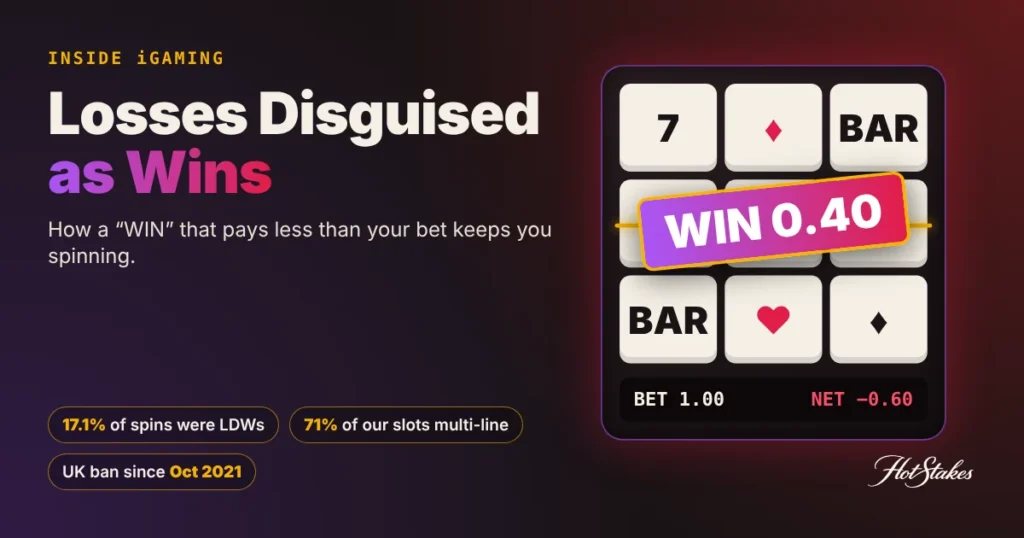
It arrives when you are tired and alone with your phone. “Hot” implies a win is due, which is never true of a random game (see is a slot due to hit?). Wins that are smaller than your stake but still flash and chime keep the feeling going; that is the trick behind losses disguised as wins.
One more finding matters here. In that 2020 study, the authors found “no relationships” between message content and recipients’ gambling risk status. The messages were “saturated with inducements to bet” whoever received them.
Takeaway: Each message asks for one small step: a tap, a deposit, a chase, a rushed choice, a late session. Spot the step and you can refuse it.
What the evidence says about win-back marketing and harm
For years the link between direct marketing and harm rested on surveys. In March 2026 it got a randomised trial.
Researchers led by Matthew Rockloff (CQUniversity) with Philip Newall (University of Bristol) followed 227 regular Australian bettors for two weeks. Those opted out of emails, texts and push notifications, compared with those still receiving them (University of Bristol, 19 March 2026):
- placed about 23% fewer bets;
- spent 39% less;
- reported 67% fewer short-term gambling harms.
Rockloff called it “clear evidence that direct gambling marketing increases gambling-related harm”. Liquor & Gaming NSW, summarising the same research programme, said offers like bonus bets and matched deposits “presented the greatest risk of harm”.
The trial looked at sports and race bettors, not casino players, and lasted two weeks. Smaller qualitative work points the same way. In a Norwegian interview study of 12 people with gambling disorder, “direct marketing was experienced as a trigger for gambling urges”, and several kept receiving it after excluding themselves (Syvertsen et al., 2020).
Takeaway: Turning the messages off is not a small gesture. In the best evidence so far, it cut spending by more than a third.
What regulators found and banned
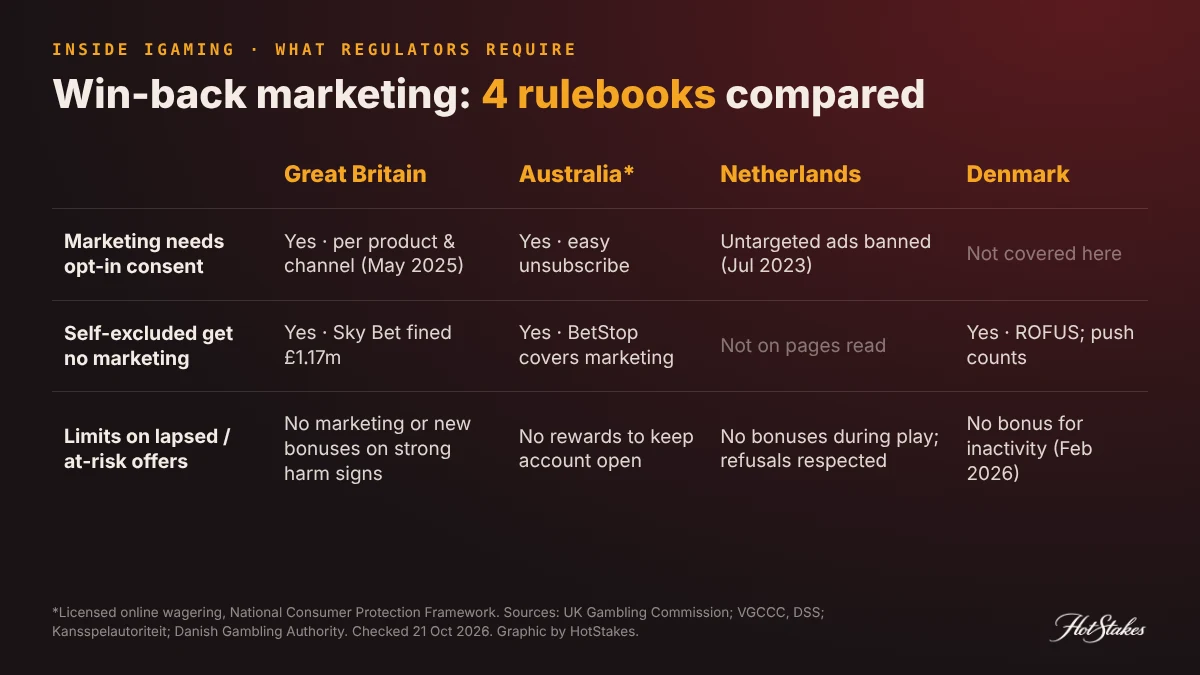
Licensed markets have moved from “please be careful” to specific bans. Here is what four regulators require, from primary sources we opened on 21 Oct 2026.
| Market | Marketing consent | Self-excluded players | Lapsed or at-risk players |
|---|---|---|---|
| Great Britain (Gambling Commission) | Opt-in per product and per channel, defaulting to opted out, since 1 May 2025 (SR Code 5.1.12) | No marketing; Sky Bet fined £1.17m in 2022 | Must prevent marketing and new bonuses where strong indicators of harm (LCCP 3.4.3, from 12 Sep 2022) |
| Australia (online wagering, national framework) | No direct marketing without consent; easy unsubscribe; no rewards for consenting (VGCCC) | BetStop exclusion also stops direct marketing (DSS) | Providers “cannot entice consumers to keep an account open” |
| Netherlands (Kansspelautoriteit) | Untargeted online gambling ads banned from 1 Jul 2023 (KSA) | Not covered on the pages we read | No ads aimed at people showing risky play; no bonuses offered during play; a refusal of bonuses must be respected (KSA) |
| Denmark (Spillemyndigheden) | — | ROFUS-registered players exempt from direct marketing; push messages count as marketing | “Bonuses may not be awarded based on a player’s inactivity” (guidance, 26 Feb 2026) |
The Sky Bet case: 41,395 self-excluded customers
In March 2022 the Gambling Commission fined Bonne Terre Limited, trading as Sky Betting and Gaming, £1.17m. A Sky Vegas “Bet £5 get 100 free spins” email went out on 2 November 2021 to 41,395 self-excluded customers and 249,159 who had unsubscribed (Gambling Commission). Chief executive Andrew Rhodes said: “Self-excluded customers are likely to be suffering gambling harm.”
Australia: the account you can’t be bribed to keep
Under the national framework, wagering providers must make closing an account simple and “not offer rewards to encourage keeping a betting account open” (VGCCC). NSW goes further on advertising: it bans the advertisement of “any offer of an inducement to participate in a gambling activity”, with fines up to $110,000 for corporations.
A caution for readers in Asia: these rules bind operators licensed in those countries. An offshore casino with no licence where you live answers to none of them, and may ignore an unsubscribe. That is why the tools in the next section matter more than any regulator.
Takeaway: Where regulators have looked, they have banned the core moves: marketing to the excluded, bonuses for going quiet and rewards for staying.
How to stop casino win-back offers: the 10-minute counter
- Withdraw consent inside your account. Open marketing or communication preferences and switch off every product (casino, sports, bingo) and every channel (email, SMS, phone, push). In Great Britain these choices must be set separately and default to off.
- Unsubscribe from each email. Use the link at the bottom of the latest one. Do it for affiliate newsletters too; they are separate lists.
- Turn off app push on iPhone. Settings → Apps → the casino app → Notifications → switch off Allow Notifications (Apple Support). Better still, delete the app.
- Turn off app push on Android. Settings → Notifications → App notifications → the app → off. Or long-press any notification, tap the settings icon and switch off All notifications (Android Help).
- Block browser pushes. In Chrome on Android: Settings → Site settings → Notifications, then block the site or turn notifications off for all sites (Chrome Help).
- Block the SMS sender on your phone so texts stop landing in your inbox.
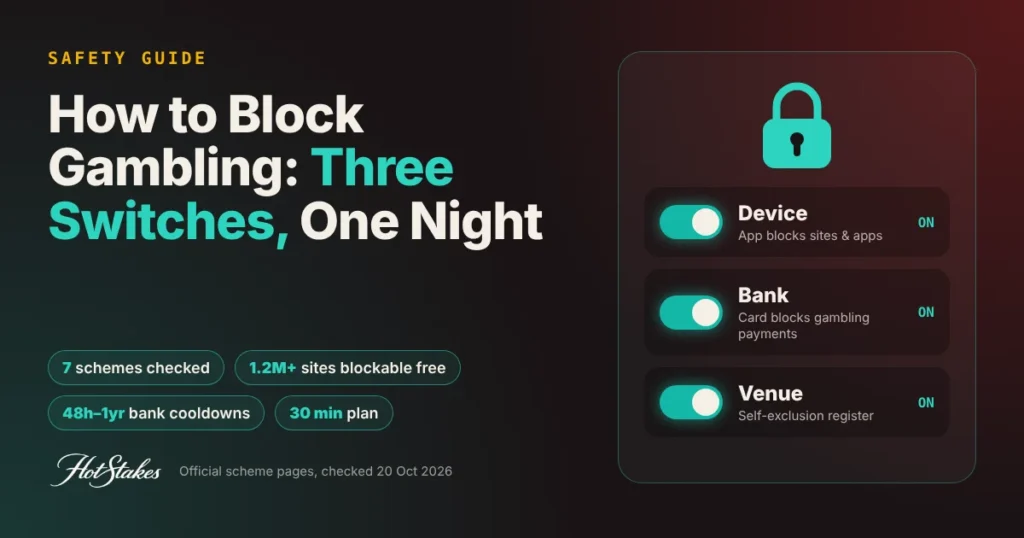
- Self-exclude if you want to stop. Self-exclusion should end marketing as well as play at licensed sites. Our guide to blocking gambling covers self-exclusion schemes, bank gambling blocks and app blockers.
If the messages keep pulling you back, take the two-minute gambling problem self-check and talk to someone: UK National Gambling Helpline 0808 8020 133, Australia Gambling Help 1800 858 858, Singapore NCPG 1800-6-668-668, Hong Kong Tung Wah 1834 633, Malaysia Befrienders KL 03-7627 2929.
Takeaway: Consent, push, self-exclusion: three switches, ten minutes. The trial above suggests it is the cheapest harm reduction you can do tonight.
More on how the business really works: Inside iGaming.
FAQ
Why do casinos keep emailing me after I stopped playing?
Because your inactivity moved you into a “dormant” or “at-risk” segment, which triggers an automated win-back sequence of reminders, bonuses and deadlines. Withdraw marketing consent in your account, unsubscribe, and self-exclude if you want to stop gambling.
What is a casino reactivation bonus?
It is an offer, such as free spins or a deposit match, sent to a player who has stopped playing, to get them to deposit again. Denmark’s regulator says bonuses may not be awarded based on a player’s inactivity.
Is it legal for a casino to market to me after I self-exclude?
Not in licensed markets such as Great Britain, Denmark or Australia’s BetStop system. The UK Gambling Commission fined Sky Betting and Gaming £1.17m in 2022 after a promotional email reached 41,395 self-excluded customers. Offshore sites may not follow any such rule.
How do I turn off gambling push notifications?
On iPhone: Settings, Apps, the app, Notifications, then switch off Allow Notifications. On Android: Settings, Notifications, App notifications, then turn the app off. Also block the site in your browser’s notification settings, or delete the app.
Does unsubscribing from casino emails actually make a difference?
Yes, according to a 2026 randomised trial of 227 Australian bettors. Those opted out of direct marketing placed about 23% fewer bets, spent 39% less and reported 67% fewer short-term harms.
HotStakes is an independent directory. Some links on this site are affiliate links; we may earn a commission at no cost to you, and it never changes our rankings. Gambling involves risk — only play with money you can afford to lose, and if it stops being fun, seek help. This article is general information, not legal advice.
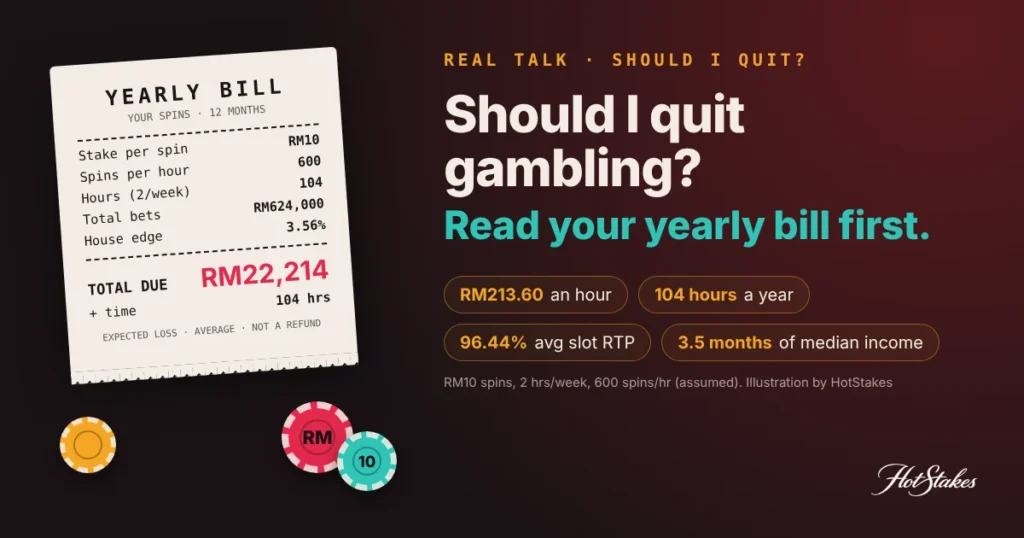 Next story →Should I Quit Gambling? What Your Habit Costs a Year

Start the discussion