

Casino Account Security: 10-Minute Lockdown Checklist
Casino account security in 10 minutes: drop SMS 2FA, stop password reuse, spot SIM-swap and fake support scams, and act fast if hacked.
In this article
- Why your bank stopped trusting SMS codes (and your casino may not have)
- Which 2FA actually protects a gambling account?
- How a SIM-swap scam empties an account
- The ‘customer service’ that asks for your OTP
- Password reuse: nobody needs to hack the casino
- The 10-minute account lockdown checklist
- Hacked? What to do in the first hour
- FAQ
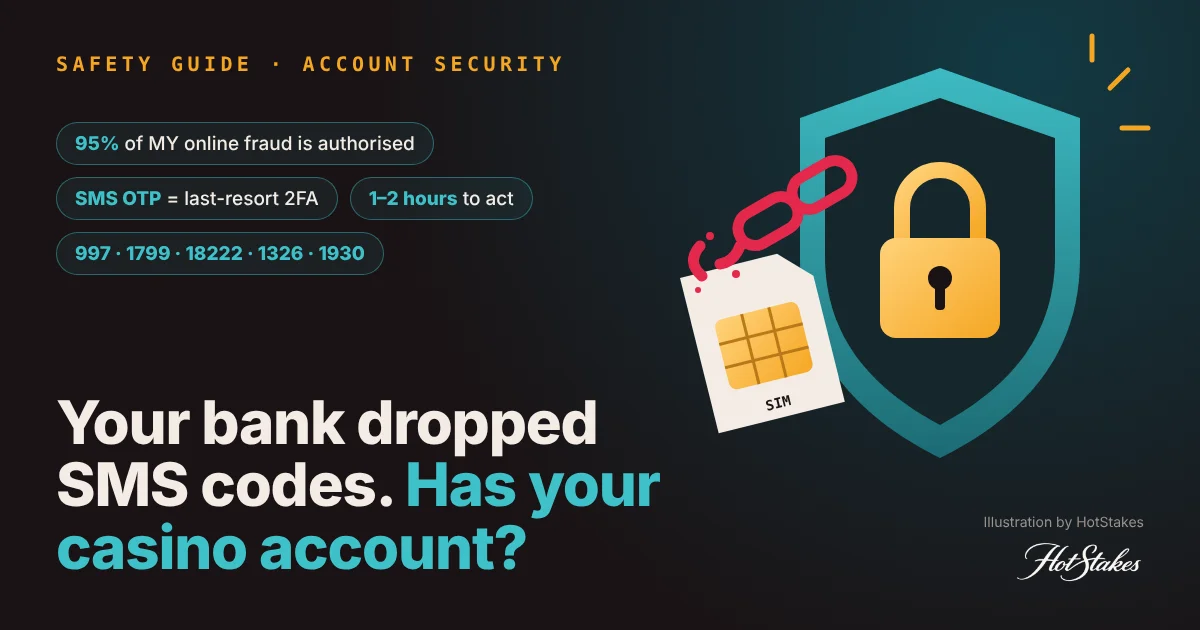
Most gambling and e-wallet accounts are not lost to clever hackers. They are lost to a reused password, an SMS code sent to a hijacked number, or a code the owner reads out to fake “customer service”. Good casino account security comes down to three moves: a unique password, 2FA that isn’t SMS, and never sharing a one-time code with anyone. Banks across Asia have already dropped SMS codes for risky transactions. Below: what regulators changed, which 2FA really holds up, a 10-minute lockdown checklist, and what to do in the first hour if you’re hacked.
Why your bank stopped trusting SMS codes (and your casino may not have)
An SMS one-time password (OTP) proves you hold a phone number. It does not prove you are you. If a scammer takes over the number, or talks you into reading the code aloud, the code works for them.
Asian regulators reached that conclusion years ago. We read their own documents on 21 Oct 2026:
- Malaysia: On 26 Sep 2022, Bank Negara Malaysia told banks to “migrate from SMS One Time Passwords (OTP) to more secure forms of authentication”, with a cooling-off period for new online banking enrolments and one authorised device per customer.
- Singapore: MAS and the Association of Banks in Singapore announced on 19 Jan 2022 that banks would remove clickable links from emails and SMS to retail customers and impose a cooling period of at least 12 hours before a new soft token can be activated on a phone (MAS/ABS release). Banks also offer Money Lock: locked funds “cannot be transferred out digitally by anyone”.
- Hong Kong: Under the HKMA’s “E-Banking Security ABC”, high-risk online banking actions move to in-app authentication instead of SMS OTP by Q4 2025, and binding a new phone requires facial recognition or similar checks, according to a government reply to LegCo (May 2025).
- Philippines: The Anti-Financial Account Scamming Act (AFASA, RA 12010), signed in July 2024, penalises phishing, social engineering and money muling (Context.ph). Under BSP Circular 1213, covered banks and e-wallets had to replace SMS and email OTPs for high-risk transactions by 25 June 2026 (GMA News).
These rules bind banks and, in the Philippines, e-wallets. They don’t reach an online casino, and offshore sites answer to no Asian regulator at all. HotStakes has not tested any operator’s login security. What you can do is check it yourself, using the list further down.
Takeaway: If your bank thinks SMS codes are too weak to approve a transfer, they are too weak to guard the account that holds your winnings.
Which 2FA actually protects a gambling account?
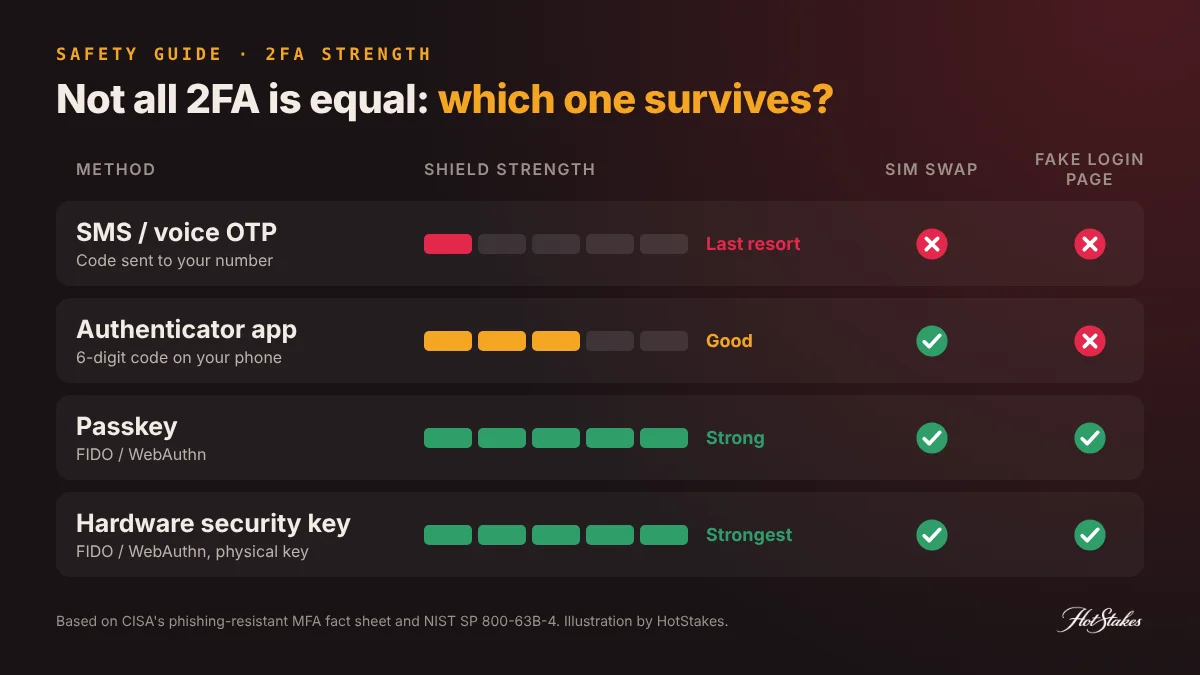
Two-factor authentication (2FA) adds a second check after your password. The question is what it survives. Two attacks matter most: a SIM swap (someone moves your number to their SIM) and a fake login page that relays whatever you type.
The US cybersecurity agency CISA is blunt: SMS and voice codes are “vulnerable to phishing, SS7, and SIM swap attacks”, and “the only widely available phishing-resistant authentication is FIDO/WebAuthn”, the standard behind passkeys and security keys. NIST’s digital identity guideline SP 800-63B-4 lists the phone network as a “restricted” channel for codes and states that “OTP authentication is not phishing-resistant”.
| 2FA method | Survives a SIM swap? | Survives a fake login page? | What to know |
|---|---|---|---|
| SMS or voice OTP | No | No | CISA: use only as a last resort. Better than nothing, worst of the options. |
| Email code | Only if your email is secure | No | Your email becomes the master key. Lock it down first. |
| Authenticator app (6-digit code) | Yes, the code lives on your device | No, you can still type it into a fake site | Big upgrade over SMS. Back up recovery codes. |
| Push approval in an app | Yes | Partly | CISA warns of “push bombing”; number matching helps. Never approve a login you didn’t start. |
| Passkey (FIDO/WebAuthn) | Yes | Yes | Tied to the real site’s address, so a look-alike page gets nothing. |
| Hardware security key | Yes | Yes | Strongest option; keep a second key as backup. |
Many casinos and e-wallets offer only SMS, or nothing. Use the best option your account allows, and if SMS is all there is, make the password and the email behind it stronger.
Takeaway: Passkey or security key if offered, authenticator app next, SMS only as a last resort.
How a SIM-swap scam empties an account
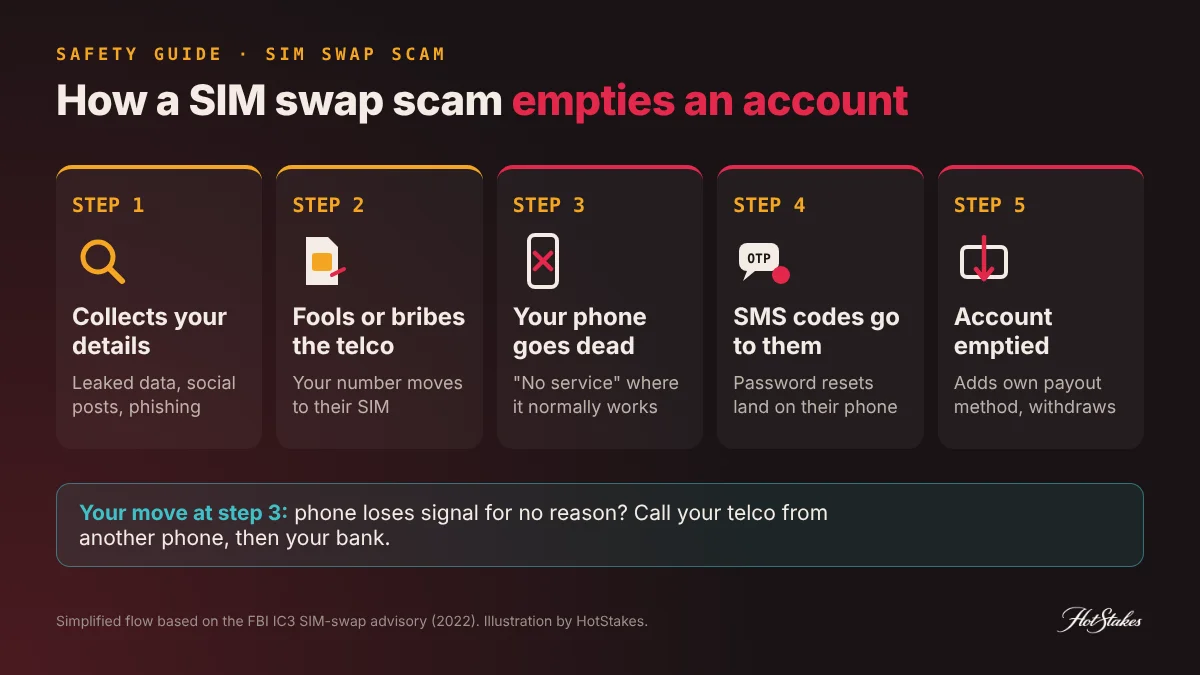
In a SIM swap, a criminal convinces your mobile operator to move your number onto a SIM they control, or bribes an insider to do it. The FBI says criminals then get your calls and texts, including the codes used to reset passwords. Its Internet Crime Complaint Center logged 1,611 SIM-swap complaints in 2021 with adjusted losses above US$68 million (FBI IC3).
Warning signs:
- Your phone suddenly shows “No service” or “SOS only” in a place where it normally works.
- You get a message about a SIM change or replacement you didn’t ask for.
- Login or password-reset alerts arrive by email for accounts you didn’t touch.
In the Philippines, SIM cards must be registered with ID under the SIM Registration Act (RA 11934). Registration makes SIMs traceable, but it doesn’t stop an attacker who impersonates you at a store. Scammers also turn the law into a script: the CICC has warned of calls threatening to suspend your SIM over “online gambling” (PNA).
Takeaway: If your phone loses signal for no reason, call your telco from another phone at once. The FBI advises watching for “any changes in SMS-based connectivity”.
The ‘customer service’ that asks for your OTP
Here’s the uncomfortable part. Strong 2FA does nothing if you approve the transaction yourself.
Bank Negara Malaysia’s Annual Report 2025 says “about 95% of online fraud cases in Malaysia are authorised transactions”. That matters for refunds. BNM’s policy on unauthorised e-banking transactions, in force since October 2024, covers transactions you did not authorise. It does not cover ones you were tricked into making, and compensation is never guaranteed.
The usual route is a fake support agent. Your e-wallet “flags” a problem, a casino “verifies” your withdrawal, or a helper in a Facebook group offers to fix a stuck deposit. In June 2026, GCash warned users about fake “GCash Support” pages and said it will never ask for your “One-Time Password (OTP) or MPIN” (unbox.ph).
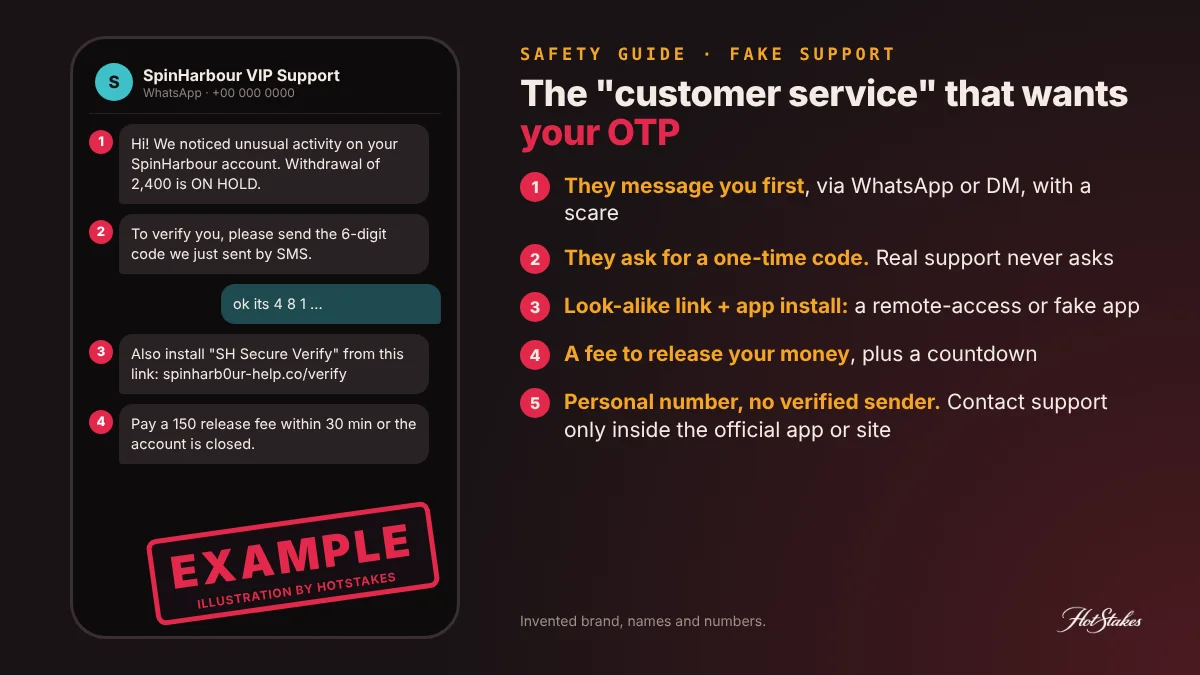
Red flags in any “support” chat:
- It asks for an OTP, PIN, MPIN or password. Real support never needs them.
- It reached you first, by DM, WhatsApp, Telegram or an unknown number.
- It wants you to install a “verification” or screen-sharing app.
- It sends a link to log in “to confirm”.
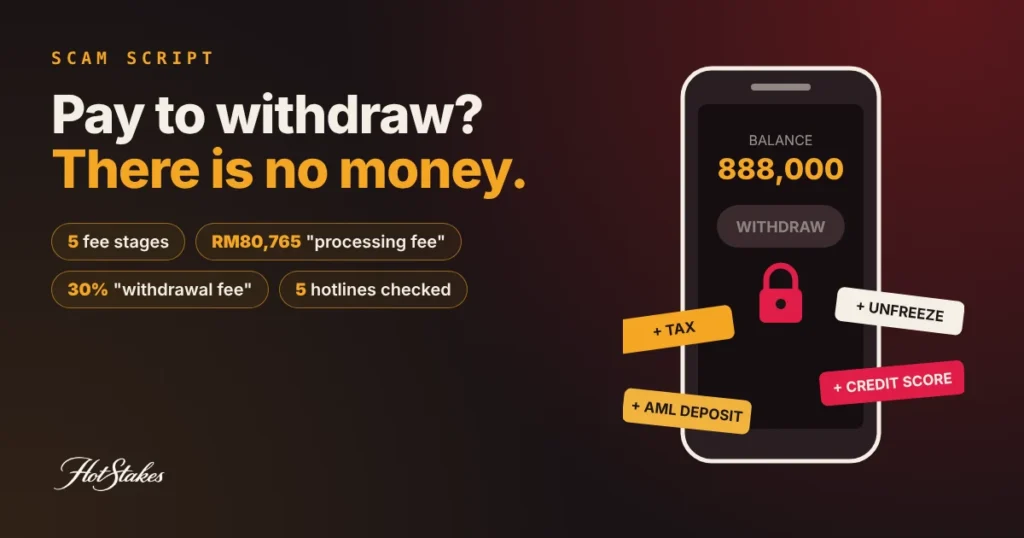
- It asks for a fee to release your money (see our KYC withdrawal hold guide for what real checks look like).
Some “agents” also ask you to receive and pass on money for them. That is a mule request, and it can put your own name on a crime (how money mule scams work).
Takeaway: A code that arrives on your phone is for your eyes only. Anyone asking for it is the attack.
Password reuse: nobody needs to hack the casino
Credential stuffing means trying usernames and passwords leaked from one site on another. It works because people reuse them.
In November 2022, attackers used passwords stolen in earlier breaches against the US betting site DraftKings. About 60,000 accounts were compromised and about US$600,000 was stolen; in some cases the group added its own payment methods and withdrew the funds. A third defendant was sentenced to 18 months in prison in 2026 (Help Net Security).
The operator’s systems weren’t the weak point. The reused passwords were.
Takeaway: One password per account. A password manager makes that painless.
The 10-minute account lockdown checklist
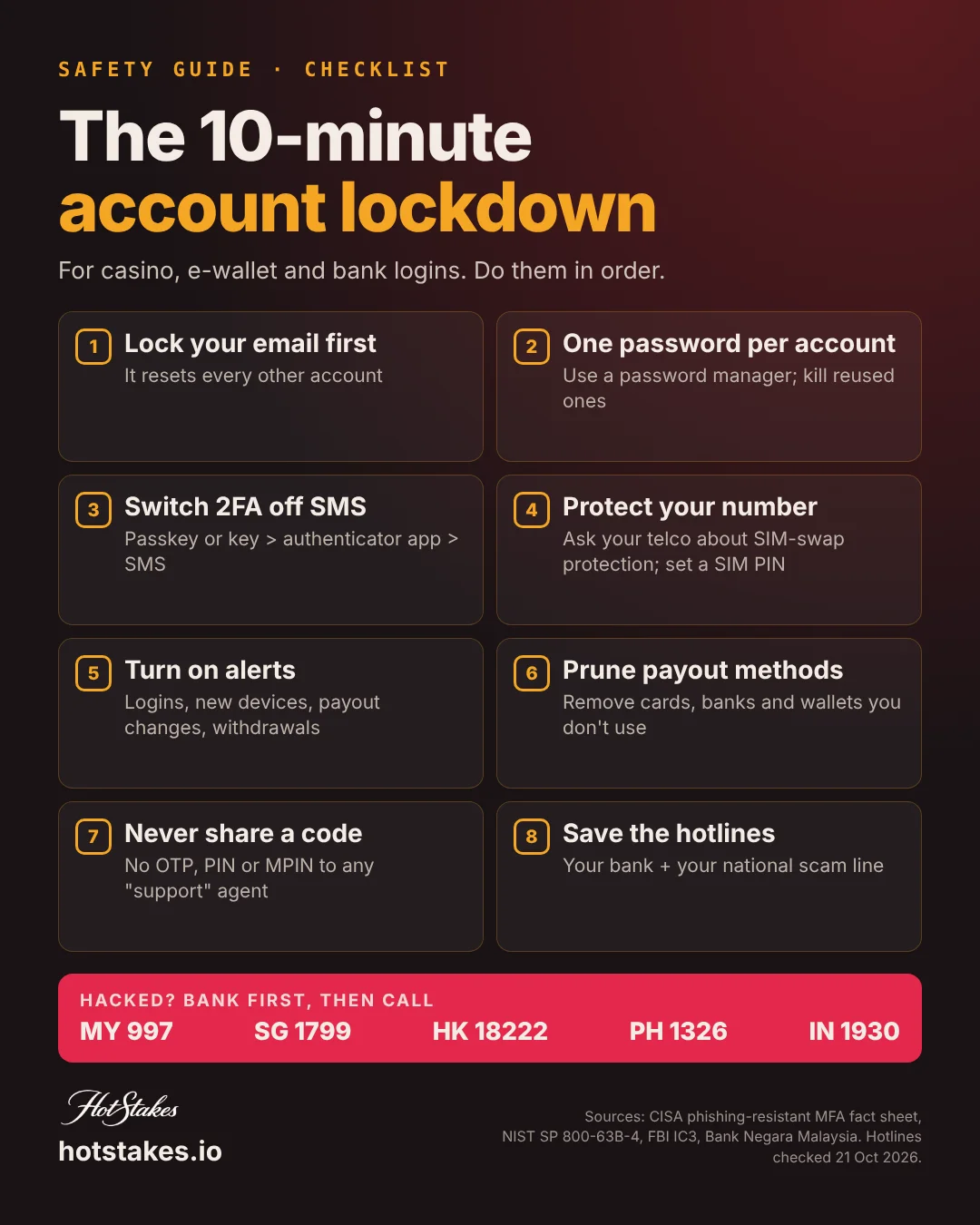
Do these in order. The first two give the biggest gain.
- Secure your email first. It resets every other account. New unique password, strongest 2FA it offers, and sign out sessions you don’t recognise.
- Give every casino, e-wallet and bank login its own password. Use a password manager. Change any password you have used twice.
- Upgrade 2FA. Passkey or security key if offered; otherwise an authenticator app. Keep SMS only if there’s nothing else. Store recovery codes offline.
- Ask your mobile operator what protects your number from a SIM replacement or port, and set a SIM PIN on your phone.
- Turn on alerts for logins, password changes, new devices and withdrawals.
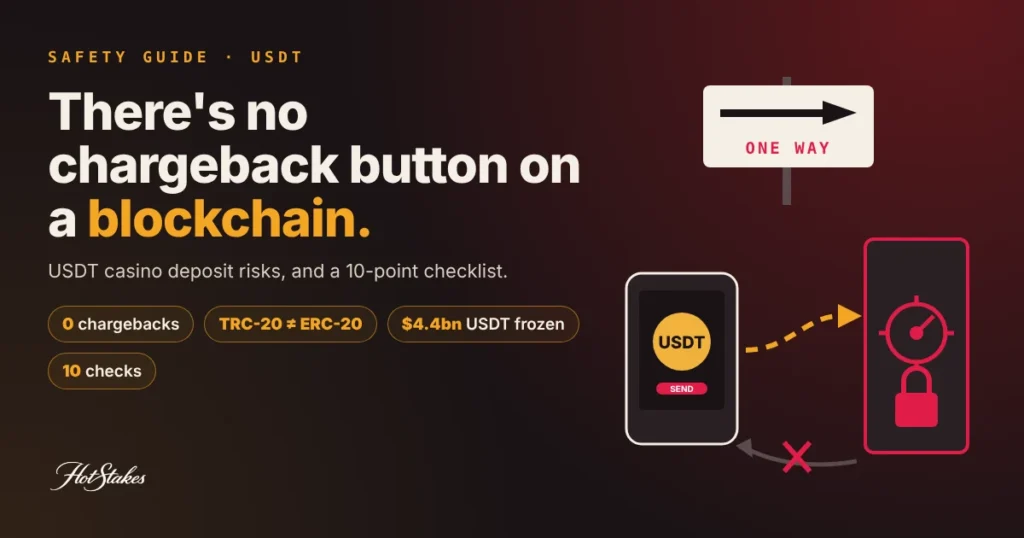
- Review payment and withdrawal settings. Remove cards, bank accounts or wallet addresses you don’t use. For crypto, see our USDT deposit risks checklist.
- Clean your device, and never share a code. Update the phone, install apps only from official stores, and delete any “casino” or “support” app sent via a link. Our fake gambling app red flags show what to look for. No OTP, PIN or MPIN goes to anyone, ever.
- Save the right numbers now: your bank’s and e-wallet’s official hotlines, plus your national scam line.
Checks to do on any casino or e-wallet yourself
- Does the account settings page offer an authenticator app or passkey, or only SMS?
- Does it email you when someone logs in or changes the payout method?
- Can you see and log out active sessions?
- Is support reachable only from inside the official site or app, not just through social media DMs?
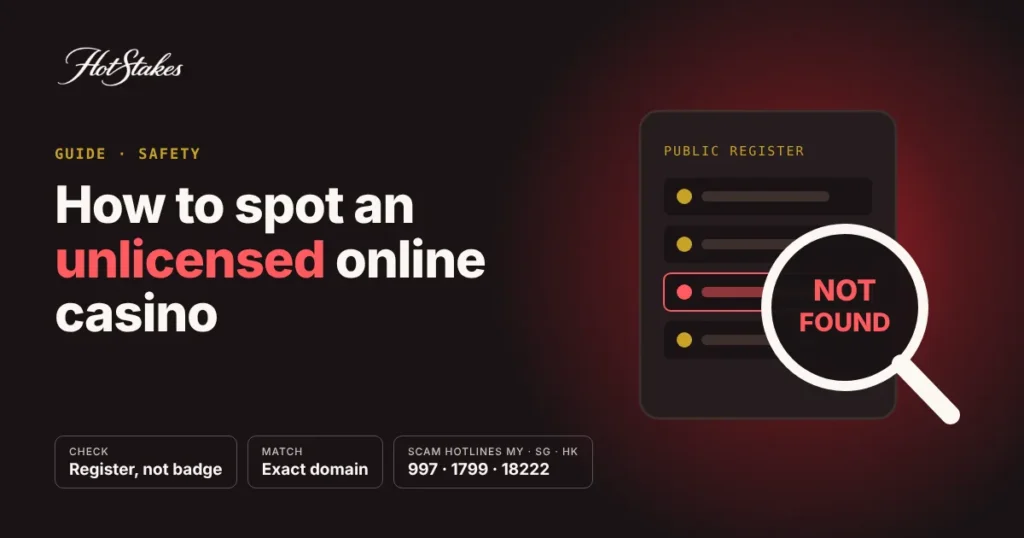
- Is the site licensed by a regulator you can verify? Our guide to spotting an unlicensed casino walks through it.
Takeaway: Ten minutes of settings beats weeks of chasing a frozen withdrawal.
Hacked? What to do in the first hour
Speed matters. Malaysia’s home minister has said “the first one to two hours are crucial”, citing cases where scammers emptied 80–90% of an account within minutes (Malay Mail).
- Call your bank or e-wallet’s official hotline (the number in the app or on your card, not one from a message). Ask them to block transfers and suspend the account.
- Call your national scam line:
- Malaysia: 997 (National Scam Response Centre, now 24/7)
- Singapore: 1799 (ScamShield Helpline, 24/7; can connect you to your bank)
- Hong Kong: 18222 (Anti-Scam Helpline)
- Philippines: 1326 (CICC Inter-Agency Response Center)
- India: 1930 (National Cyber Crime Reporting Helpline) and cybercrime.gov.in
- If your phone has no signal, call your mobile operator from another phone and ask whether your SIM was changed or your number moved.
- From a clean device, retake your email. Change the password, sign out all sessions, check forwarding rules and recovery details.
- Lock the casino or e-wallet account. Contact support only through the official site or app. Ask them to freeze withdrawals, remove any payment method you didn’t add, and log out all devices.
- Change every account that shared the password, and switch 2FA off SMS where you can.
- Collect evidence: screenshots of transactions, alerts, chats and phone numbers, with times.
- File a police report and keep the reference number for your bank.
- Ignore anyone who offers to recover your money for a fee. That is a second scam.
Takeaway: Bank first, scam line second, email third. Everything else can wait ten minutes. Not sure if a message is a scam? Try our scam quiz or browse more safety guides.
FAQ
Is SMS 2FA good enough for a gambling account?
It’s better than nothing, but it is the weakest kind. CISA says SMS codes are vulnerable to phishing and SIM swap attacks. Use an authenticator app, passkey or security key if your casino or e-wallet offers one.
What is a SIM swap scam?
A criminal gets your mobile number moved to a SIM they control, by fooling or bribing staff at your operator. They then receive your SMS codes and can reset your passwords. Sudden loss of signal is a key warning sign.
My e-wallet was hacked. What do I do first?
Call the e-wallet’s official hotline from inside the app and ask them to block the account. Then call your scam line: 997 in Malaysia, 1799 in Singapore, 18222 in Hong Kong, 1326 in the Philippines or 1930 in India. Then secure your email and file a police report.
Will casino or e-wallet support ever ask for my OTP?
No. A one-time code is only for you to enter yourself. GCash, for example, says it will never ask for your OTP or MPIN. Anyone who asks, in any chat, is trying to take over your account.
Will I get my money back if my account is hijacked?
It isn’t guaranteed. Bank Negara Malaysia’s policy covers unauthorised e-banking transactions, not ones you were tricked into approving. Offshore casinos are usually outside any Asian regulator’s reach. Report within the first hour to give your bank the best chance to block funds.
HotStakes is an independent directory. Some links on this site are affiliate links; we may earn a commission at no cost to you, and it never changes our rankings. Gambling involves risk — only play with money you can afford to lose, and if it stops being fun, seek help. This article is general information, not legal advice.
Prefer to play only where licences are checked? Browse vetted operators by currency. 18+ only.
 Next story →Should I Quit Gambling? What Your Habit Costs a Year

Start the discussion