
Casino VIP Programmes: How Hosts Keep You Playing
How a casino VIP host works, who pays for the perks, what the UK regulator found in VIP fines, and 7 signs a VIP offer is a hook.
In this article
A casino VIP host is a relationship manager whose job is to keep a small group of high-spending players depositing. Gifts, cashback, event tickets and a personal phone number are the tools. The perks are paid for out of what the casino expects you to lose, and Britain’s regulator has fined firms millions for treating heavy losers as VIPs instead of checking on them. Below: how the business logic works, what the UK Gambling Commission found, the signs a VIP offer is a hook, and how to step out.
What a casino VIP host actually does
In a land-based casino, the host walks the floor. Online, the host is an “account manager” or “VIP manager” who messages, emails or calls you. The titles differ. The job is the same.
- Spot the spenders. Systems flag accounts with high deposits, high turnover or long sessions.
- Build a relationship. A named person, a direct line, birthday messages, “just checking in”.
- Hand out incentives. Tailored bonuses, cashback on losses, faster withdrawals, higher limits, dinners, event tickets, trips.
- Win you back. When you go quiet, the host reaches out. Reactivation is part of the role.
The UK Gambling Commission’s own guidance lists the toolkit: “individualised bonuses, benefits, or gifts” and invitations to “hospitality, events, dinners”. It also says high value customers “provide disproportionate revenue to licensees”.
Takeaway: a host is not a concierge who happens to work at a casino. A host is a retention channel aimed at the players who matter most to revenue.
Why VIP programmes exist: a few players pay most of the bills
The clearest public evidence comes from Patterns of Play, a study by NatCen and the University of Liverpool for GambleAware. Researchers analysed real account data from seven major British online operators, July 2018 to June 2019.
What they found:
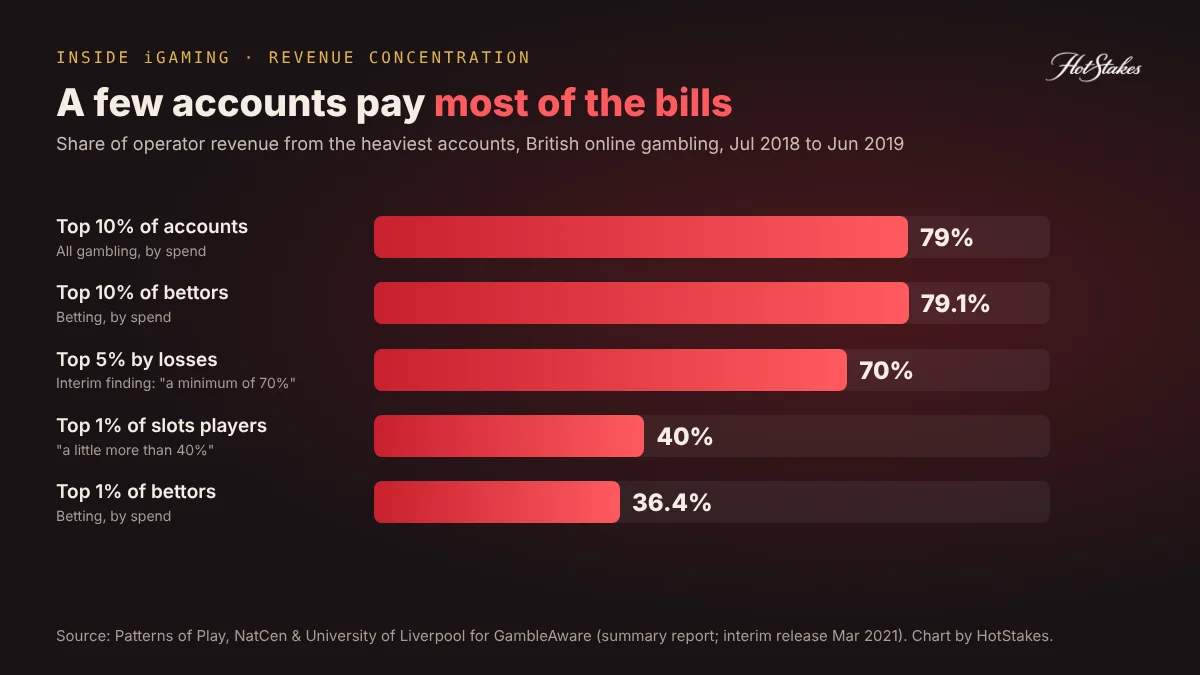
- The top 10% of accounts by spend delivered 79.0% of operator revenue across all gambling.
- In slots, the top 1% of players generated “a little more than 40%” of gross gambling yield.
- In betting, the top 1% generated 36.4% of operator win; the top 10% generated 79.1%.
- An earlier interim release found the 5% of accounts with the highest losses generated at least 70% of gross gambling yield.
Read that again from the casino’s side. Losing one ordinary player costs little. Losing one top-1% slots player can cost as much as hundreds of casual ones. The same study found 30.4% of gaming players losing more than £2,000 a year lived in the 20% most deprived areas.
Takeaway: VIP gambling programmes are built around revenue concentration. The people a host is told to keep are, by definition, the people losing the most.
The maths behind a “free” gift
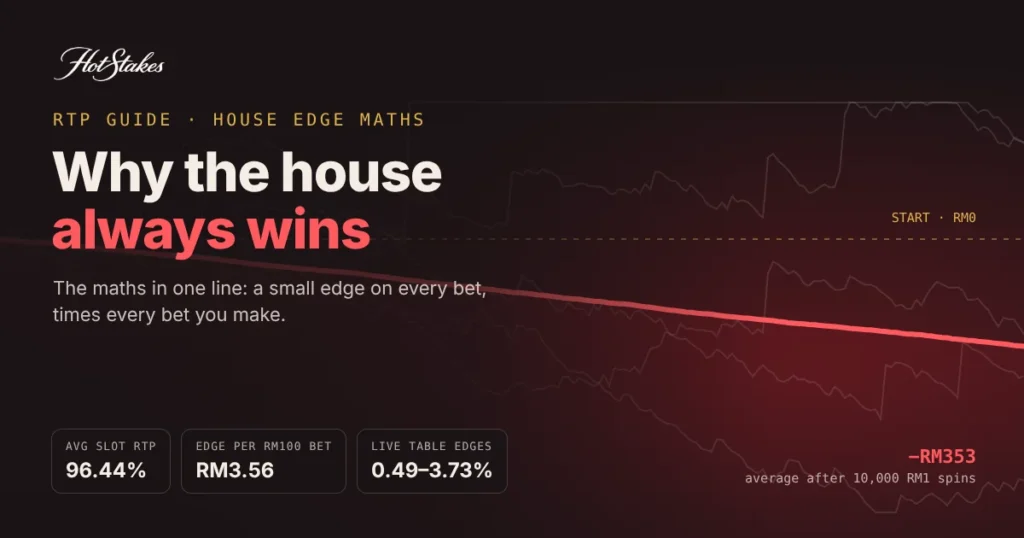
A comp feels like generosity. It is closer to a refund on a small slice of your expected loss. To show the scale, we ran the numbers on 20 Oct 2026 using house edges from our own game database (StakeGO live tables and Hotdog Gaming slots).
Assumption for illustration: £4,000 wagered per hour (for example 40 spins at £100), 12 hours a week, about 52 hours a month. Real results swing wildly; these are long-run averages.
| Game (our data) | House edge | Expected loss per hour | Expected loss per month | 10% loss cashback returns |
|---|---|---|---|---|
| Live roulette (single zero) | 2.7% | £108 | £5,616 | £562 |
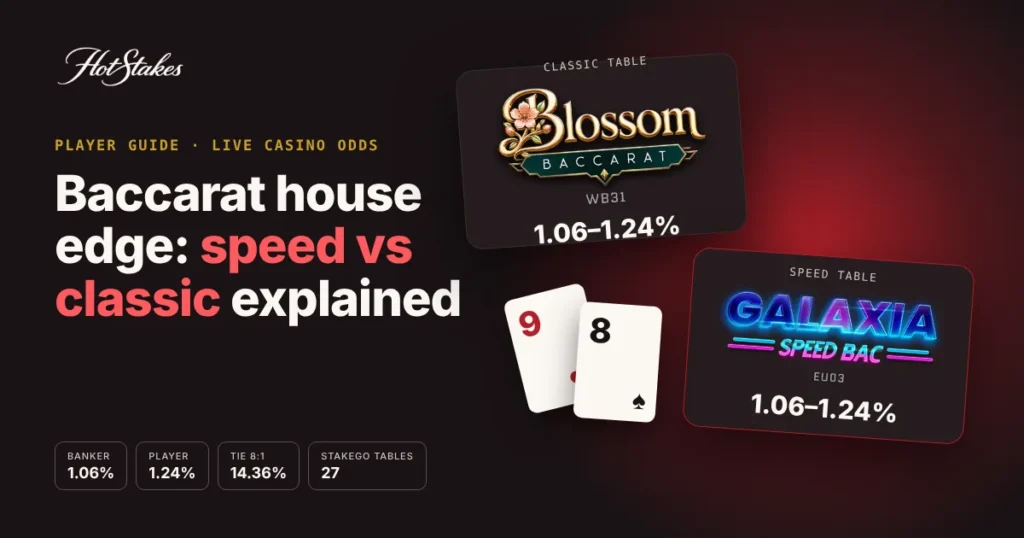
| Live baccarat (banker, low end) | 1.06% | £42 | £2,205 | £220 |
| VIP Blackjack (99.51% RTP, perfect strategy) | 0.49% | £20 | £1,019 | £102 |
| Panda Win! slot (95.55% RTP) | 4.45% | £178 | £9,256 | £926 |
So a £200 dinner for a roulette regular at those stakes costs the house under 4% of one month’s expected win. A 10% cashback still leaves the casino with 90% of the expected loss. And cashback paid as a bonus often comes with playthrough rules; see how wagering requirements work.
Why do slots dominate the table? Higher edge and faster play. Our guide to RTP vs volatility explains why a “97%” game can still empty a balance fast, and this speed baccarat breakdown shows how faster rounds raise hourly cost.
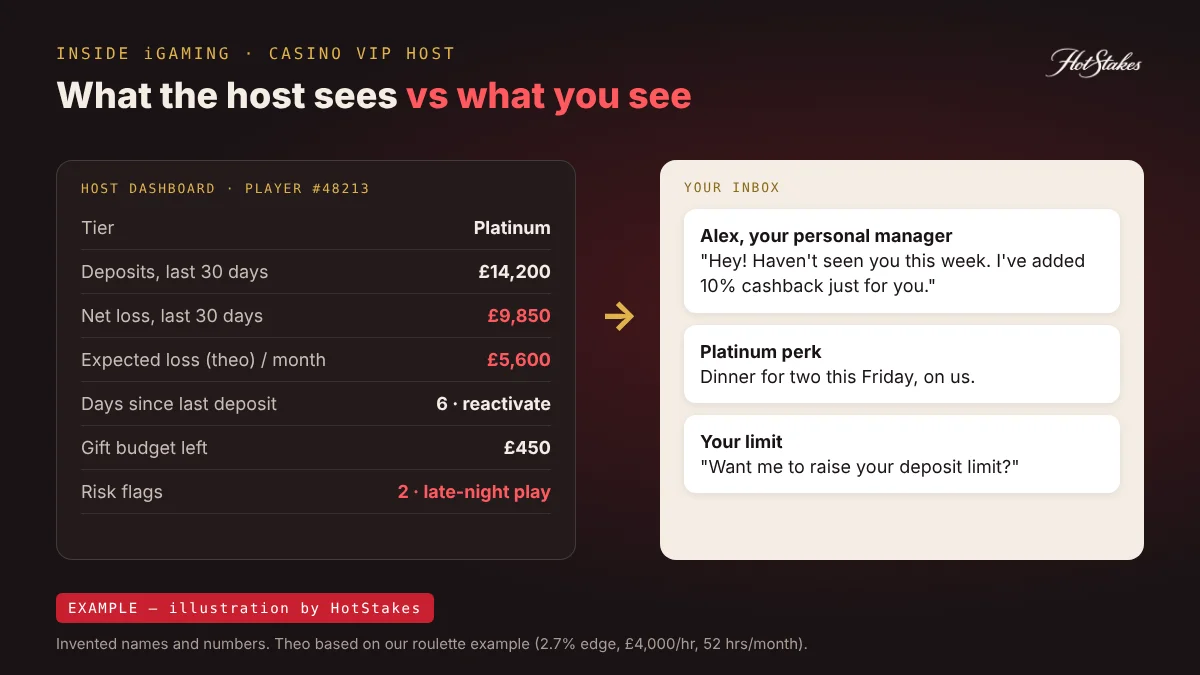
Takeaway: a VIP perk is a retention cost, priced against what you are expected to lose. It never changes the house edge.
What the UK regulator found when it looked
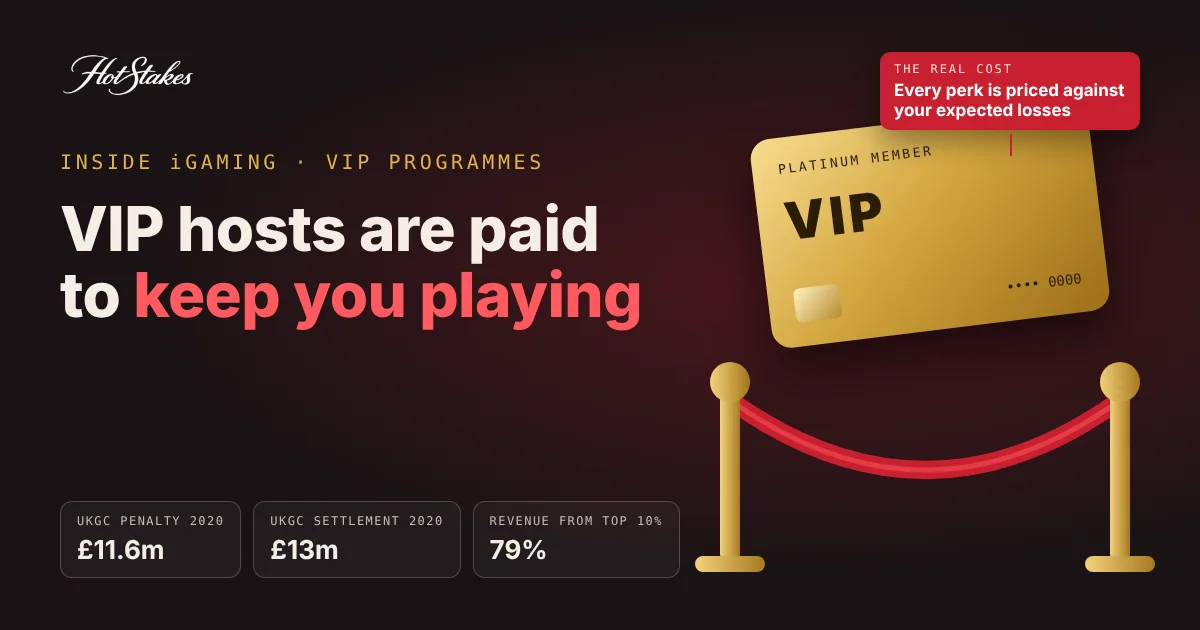
Britain is the best-documented case because the Gambling Commission publishes its findings. In January 2020 it said “the approach of some licensees has exacerbated at-risk behaviour” and set up work on “bonuses, hospitality and gifts” around VIP programmes. What follows are the regulator’s findings, not ours.
Three 2020 cases
- March 2020, £11.6m (online operator). The Commission found no source-of-funds checks on a “VIP” customer who deposited over £8m and lost over £4m over four years. Another customer deposited and lost £187,000 in two days without an effective safer-gambling interaction.
- April 2020, £13m (land-based casino group). The regulator cited “serious systematic failings” in VIP decisions. Examples: a self-excluded customer who lost £240,000 over 13 months, and a nanny allowed to lose £18,000 in a year while borrowing from family.
- 2020, £3.5m it would have imposed (online operator). A 25-year-old man who later died by suicide had been given VIP status without checks that he could afford it, despite declined card payments. The firm surrendered its licence.
Two years earlier, a regulator executive had already warned operators against assuming “VIP customers don’t experience difficulties”.
The October 2020 rules
On 30 September 2020 the Commission announced new rules for VIP practices, in force from 31 October 2020. It said VIP numbers had already fallen 70% after it challenged the industry, and warned it could “ban such schemes”. Under the high value customer guidance:
- Affordability, harm-risk and source-of-funds checks come before VIP status.
- Accounts are reviewed “at least quarterly”; status is suspended if a check fails.
- A senior, personally licensed executive is accountable for each scheme.
- Staff “should not be incentivised or remunerated based on a customer’s loss, spend, or activity.”
- Incentives should pause while signs of harm are investigated.
Five years on
The Commission’s July 2025 monitoring report says a 2021 review estimated a 90% drop in customers signed up to schemes. Schemes made up about 3% of operator revenue in its 2024 sample. But 60% of respondents still ran one, and land-based casinos reported the highest reliance.
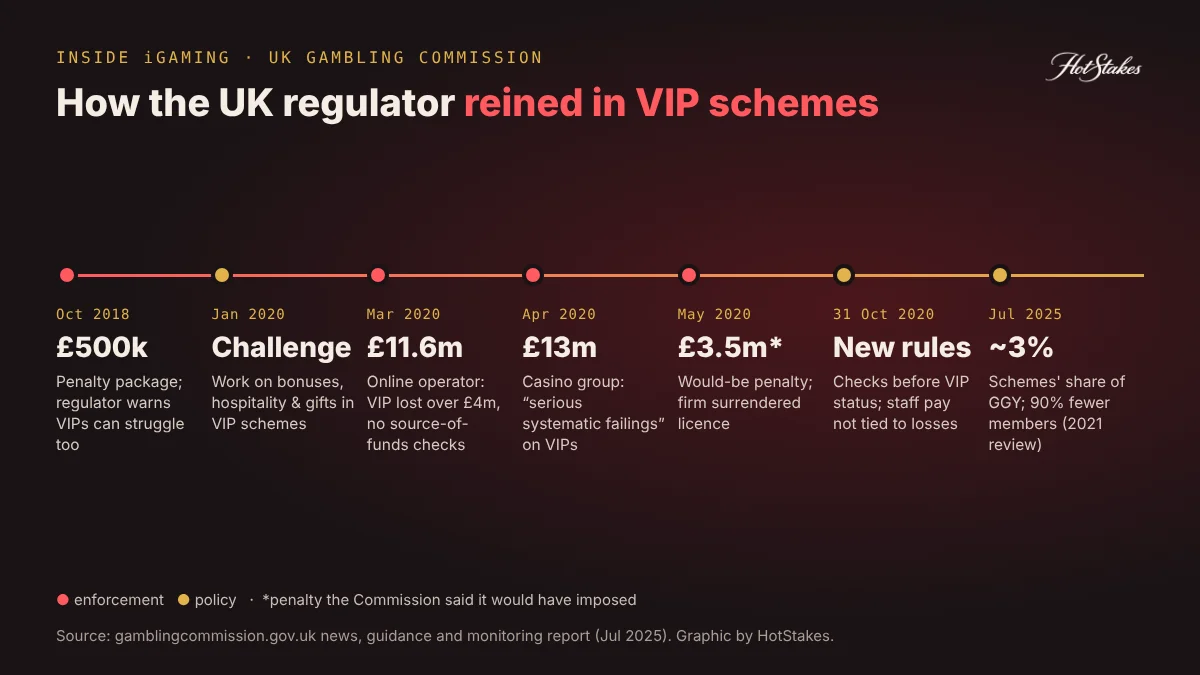
Those rules cover British-licensed operators only. Offshore and unlicensed sites are not bound by them. Asian junket-style VIP rooms are a separate story we cover elsewhere.
Takeaway: when a regulator looked closely, it found VIP treatment often went to the people showing the clearest signs of harm.
7 signs a VIP offer is a hook
Not every loyalty point is sinister. The difference is whether the offer is triggered by your losses or your absence.
| Ordinary loyalty perk | Hook (red flag) |
|---|---|
| Same points rate for everyone | A “personal” offer right after a big loss |
| Generic email you can unsubscribe from | A named host who messages you directly, often late at night |
| Small, fixed rewards | Cashback that grows the more you lose |
| No questions about you | Upgrade without any affordability or source-of-funds questions |
| You can leave quietly | “We miss you” gifts when you take a break |
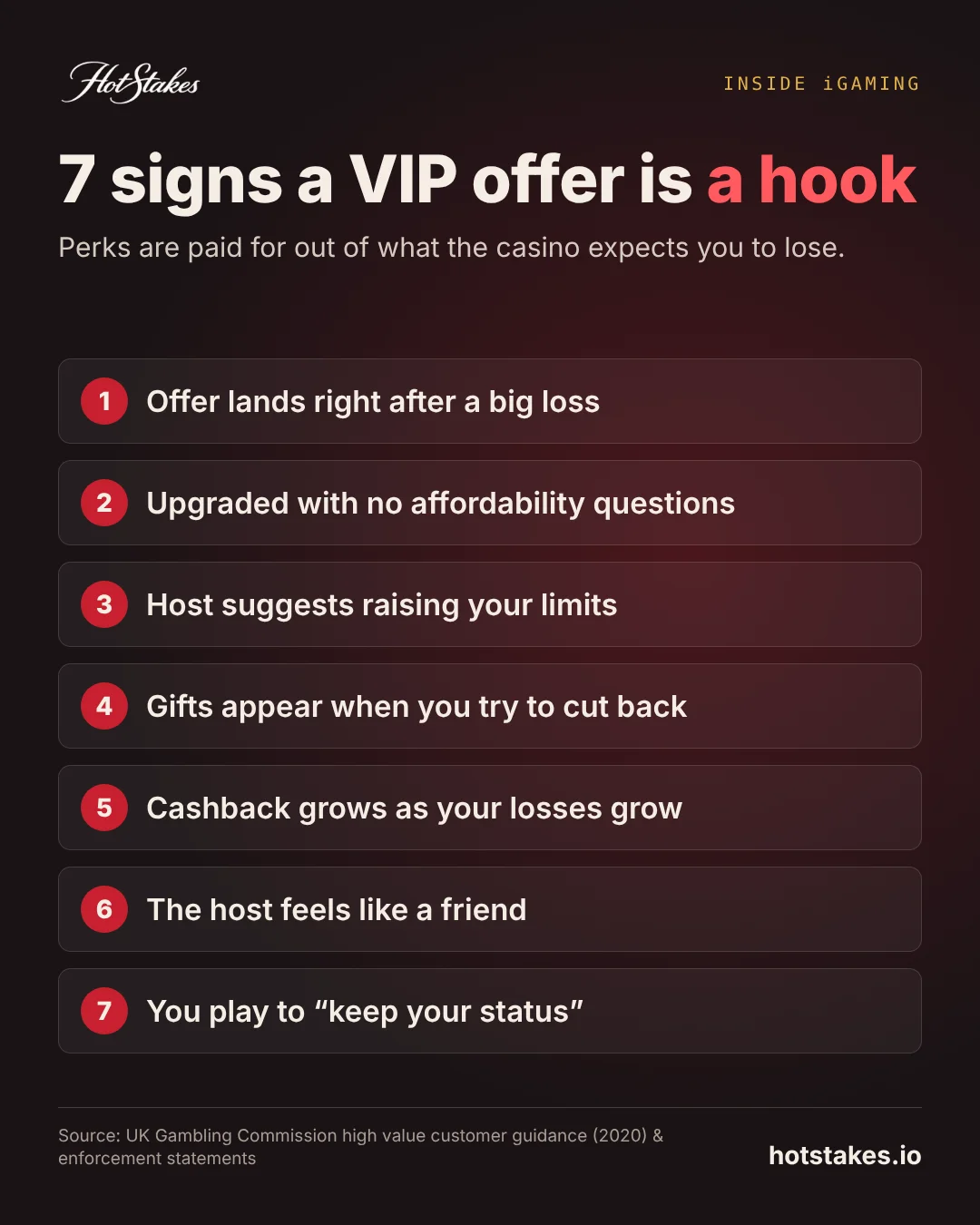
The seven signs to watch, based on the Commission’s guidance and cases:
- The offer arrives straight after a heavy losing session.
- You were upgraded without anyone asking about income or affordability.
- Your deposit limits were raised, or the host suggested raising them.
- Gifts or tickets appear when you go quiet or try to cut back.
- Cashback or bonuses scale with your losses.
- The host is your “friend” and the chat feels personal, not transactional.
- You feel guilty saying no, or you play to “keep your status”.
Takeaway: if two or more of these fit, treat the programme as a marketing tool aimed at your wallet, not a reward.
How to step out of a VIP programme
- Tell the host in writing that you want to leave the VIP programme and stop personal contact. Keep a copy.
- Opt out of all marketing in your account settings: email, SMS, phone and push.
- Set a deposit limit you would be comfortable with on your worst day.
- Take a time-out if you need breathing space, or self-exclude from the operator.
- In Great Britain, use GAMSTOP, a free service that blocks you from British-licensed gambling sites and apps in one step.
- Avoid sites that ignore these tools. Offshore casinos that “welcome” self-excluded players are a warning sign; see how to spot an unlicensed casino. If a withdrawal gets stuck while you leave, read why KYC holds happen.
- Talk to someone. If gambling is costing more than you can afford, contact a local gambling support service or your doctor.
Takeaway: leaving is your right. A licensed operator should process it without argument.
More on how the business side works: browse our Inside iGaming coverage.
FAQ
What does a casino VIP host do?
A casino VIP host manages a small group of high-spending players. They offer tailored bonuses, cashback, gifts and hospitality, and contact players who go quiet. The aim is to keep high-value customers playing at that casino.
Are casino VIP programmes worth it?
Perks are funded from your expected losses and do not change the house edge. On our example roulette figures, a 10% cashback still leaves the casino 90% of what it expects to win. For most people the extra play costs more than the perks return.
Are VIP schemes legal in the UK?
Yes, but since 31 October 2020 the Gambling Commission requires affordability, harm-risk and source-of-funds checks before a customer gets VIP status, regular reviews, and staff pay that is not tied to customer losses.
Can I ask to leave a VIP programme?
Yes. Ask in writing, opt out of marketing, set deposit limits, and consider a time-out or self-exclusion. In Great Britain, GAMSTOP blocks all British-licensed gambling sites in one step.
What fines has the UK regulator issued over VIP customers?
In 2020 the Gambling Commission announced an £11.6m penalty against an online operator and a £13m settlement with a land-based casino group over VIP failings. It said it would have imposed £3.5m on a third firm that surrendered its licence.
HotStakes is an independent directory. Some links on this site are affiliate links; we may earn a commission at no cost to you, and it never changes our rankings. Gambling involves risk — only play with money you can afford to lose, and if it stops being fun, seek help. This article is general information, not legal advice.
 Next story →Wrong-Number Text Scam: The Script, Message by Message