

My Husband Gambles: What Can I Do? A Guide for Partners
Warning signs, what to say (and not say), how to protect shared money, and family helplines for SG, HK, PH, MY, India and the UK.
In this article
You found the betting app, the missing savings or a letter about a loan you never signed, and now you’re wondering what to do tonight. You can’t make your partner stop gambling, but you can name the problem calmly, ring-fence your own money and get support for yourself today, even if they aren’t ready. This guide covers the recognised warning signs, words that open a conversation instead of starting a fight, practical money protection and help lines we checked on 20 Oct 2026.
Is it a gambling problem, or just a hobby?
Plenty of people bet without harm. The line is crossed when gambling starts costing more than money. Singapore’s National Council on Problem Gambling (NCPG) lists these signs:
- Betting with more money than planned
- Repeatedly trying to win back losses
- Lying about problems caused by gambling
- Missing work and family commitments to gamble
- Thinking about gambling all the time
- Trying to cut down but not managing it
- More debt, unpaid bills or other money trouble because of gambling
You don’t need to tick every box. You also don’t need to diagnose anyone. If two or three of these fit, it is worth talking to a professional, for their sake and yours.
Why partners often find out last
The UK Gambling Commission interviewed 25 people harmed by someone else’s gambling in spring 2026. Partners were the largest group, and the report found that “partners often carry the most sustained harms”.
One reason: betting on a phone looks exactly like scrolling. The same study says app-based gambling removes the cues that once gave a problem away. Many partners only found out through a financial shock, such as a debt they never knew existed or money missing from a shared account.
You are also not alone.
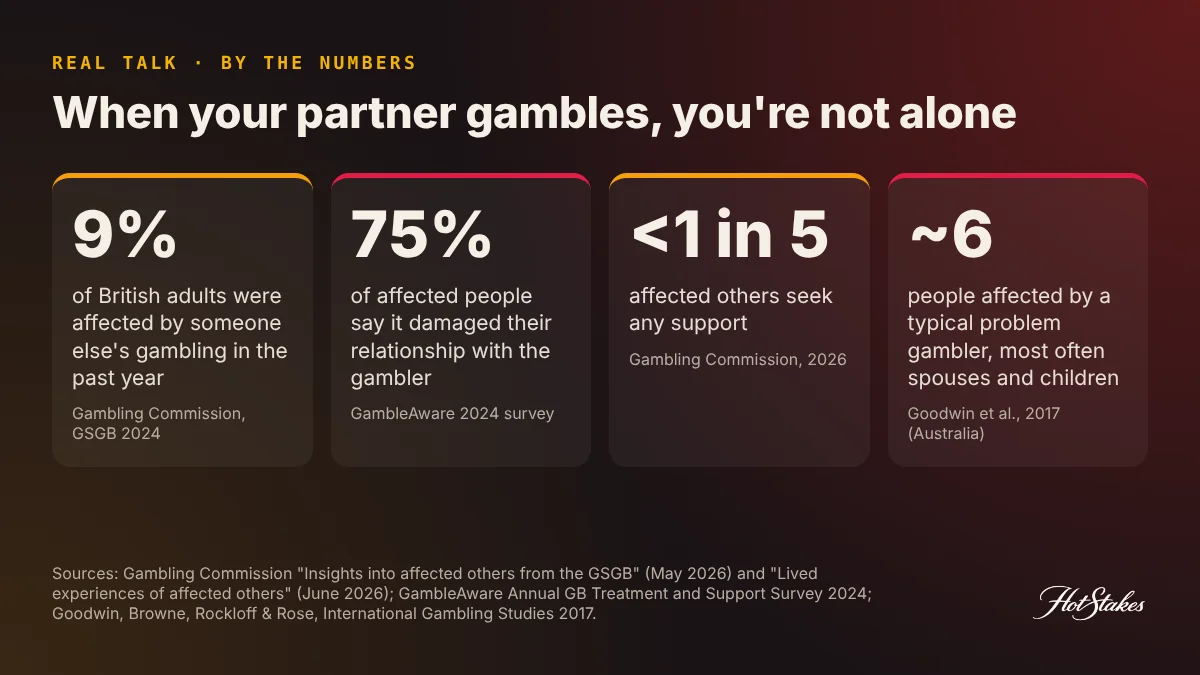
In Great Britain, 9% of adults were affected by someone else’s gambling in the past year. In GambleAware’s 2024 survey, 75% of affected people said it damaged their relationship with the person who gambles, and 48% said they could no longer trust them. An Australian study estimated that a typical problem gambler affects about six people, most often spouses and children.
Takeaway: Missing money plus secrecy around a phone is a pattern worth acting on, not a reason to blame yourself for missing it.
How to start the conversation
The goal of the first talk is not a confession. It is an open door. Charity guidance from GambleAware and GambleAware NSW points the same way:
- Pick your moment. Both of you sober, calm and not just after a big loss or a fight.
- Use “I” statements. Share facts and how they affect you, without blame.
- Ask how big it is. Citizens Advice suggests telling them how their behaviour affects you and asking about the scale.
- Listen and don’t interrupt. Interrupting can lead to misunderstanding, GambleAware notes.
- End with one small next step, such as a helpline call, and leave the door open if they deny it.
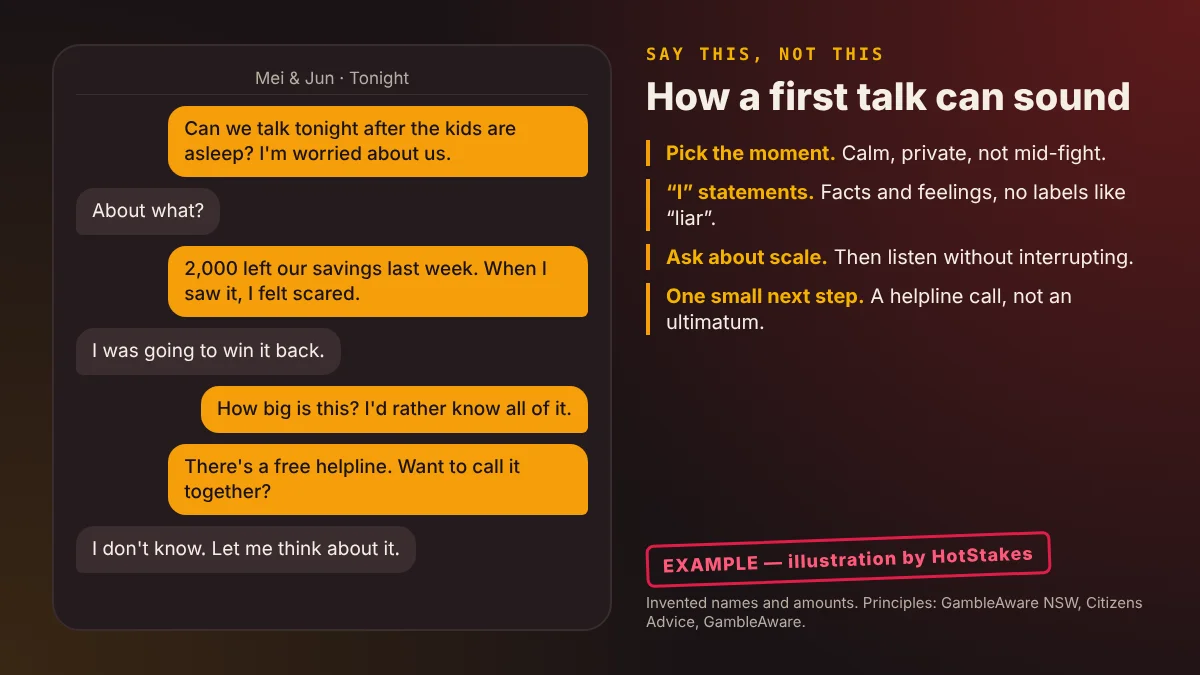
Here is how that sounds in practice. The phrases are EXAMPLES written by HotStakes, based on the charity principles linked in the right-hand column.
| Say this (EXAMPLE) | Not this (EXAMPLE) | Why |
|---|---|---|
| “Can we talk tonight after the kids are asleep? I’m worried about us.” | “We need to talk. Now.” | Choose the right time (Gambling Harm Support SA) |
| “2,000 left our savings last week. When I saw it, I felt scared.” | “You’re a liar and a gambler.” | Facts and feelings, no labels or blame (GambleAware NSW) |
| “How big is this? I’d rather know all of it.” | “How could you be so stupid?” | Ask about scale (Citizens Advice); no belittling (GambleAware NSW) |
| “I’m here. You don’t have to sort this out alone.” | “Admit it. Just admit you’re addicted.” | Don’t push if they deny it; keep the door open (GambleAware NSW, SA) |
| “Being angry is OK. Shouting at me isn’t.” | Shouting back, or going silent for days | Anger is OK, aggression isn’t (GambleAware NSW) |
| “There’s a free, confidential helpline. Want to call it together?” | “I’ll cover it this one last time.” | Point to support options (SA); protect your own money (next section) |
If your partner threatens you or makes you feel afraid, Citizens Advice notes this “might be domestic abuse”. Your safety comes before any conversation.
Protecting shared money
The Gambling Commission study found partners often ended up as the household’s financial manager, and some were still repaying loans taken out without their knowledge years later. You can limit that damage. In order:
- Get the full picture. Look at shared statements, credit card bills and any letters. Citizens Advice says to keep an eye on finances because “you might not know how big the problem is.”
- Move your income to an account in your name only. Keep bills and essentials paid from it while things are unclear.
- Review joint credit. With a joint loan, Citizens Advice says “you’ll both be responsible for the debts”, and your credit rating can be affected.
- Use bank gambling blocks the right way. Many banks let a cardholder block gambling payments. But GamCare is clear: you can’t set one for someone else without power of attorney, and on a joint account each holder must set their own. Switching a block off usually only takes effect after a 48- or 72-hour cooling-off period, and blocks may not stop e-wallets or some transfers.
- Don’t pay debts blindly. Get advice first. Paying quietly can hide the scale of the problem from both of you.
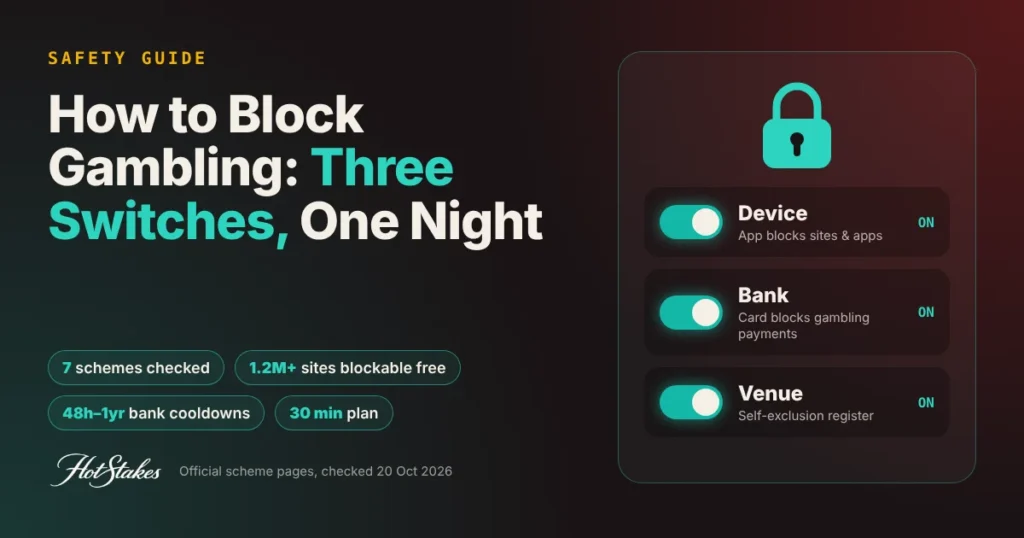
For the full menu of blocking tools your partner can switch on (and that you can suggest), see our guide on how to block gambling on phones, banks and venues.
What you are and aren’t responsible for
Rules differ by country, so get local legal or debt advice. As a UK example, Citizens Advice explains:
- Debt in their name only: you aren’t responsible for paying it back.
- Joint debt: you both are.
- A loan taken in your name without your permission: that is fraud. Report it to the lender and the police.
Red flags that go beyond gambling
- Your partner asks to “borrow” your bank account to move money for someone else. That can be a money mule scheme, and the account holder carries the legal risk.
- Gifts, trips or calls from a “personal manager” at a betting site. Read how casino VIP hosts work to see why heavy losers get the most attention.
Takeaway: Protect the money you control first. Blocks and limits on their side only work if they switch them on.
Singapore families: the Family Exclusion Order
Most gambling barriers need the gambler’s cooperation. The Gambling Commission study found affected others met safer-gambling tools mostly at crisis point, and all of them required the person gambling to start and keep them going. Singapore is a notable exception.
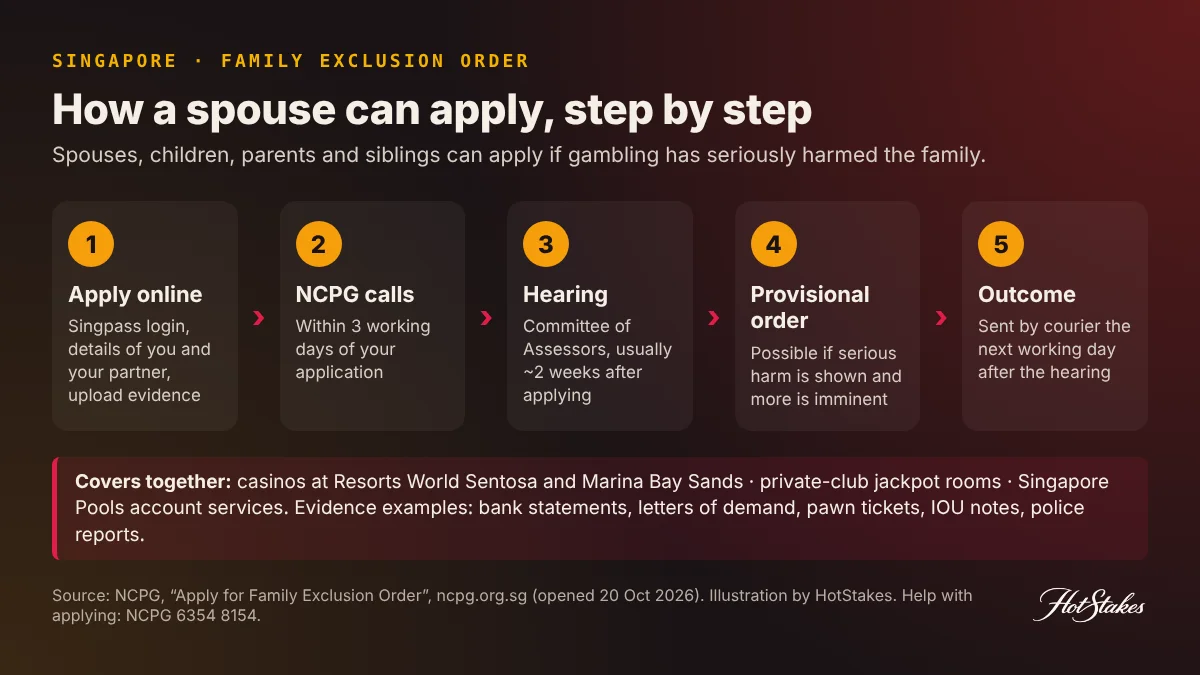
A Family Exclusion Order from NCPG bars a family member whose gambling has seriously harmed the family from:
- the casinos at Resorts World Sentosa and Marina Bay Sands
- jackpot machine rooms in private clubs
- Singapore Pools account services (existing accounts lose access; new accounts can’t be opened)
It covers all of these together. Spouses, children, parents and siblings can apply.
- Apply online with Singpass and upload evidence. NCPG lists examples such as bank statements, letters of demand, credit card bills, pawn tickets, IOU notes and police reports.
- NCPG contacts you within 3 working days.
- A Committee of Assessors hears the case, usually about 2 weeks after you apply. Your partner is summoned and can consent or object.
- If serious harm is shown and more harm is imminent, a provisional order can be made while the case is decided.
- The outcome is sent by courier the next working day after the hearing.
Your partner is notified of all documents, so plan for your safety if that worries you. NCPG takes calls about applying on 6354 8154. For a lighter option, Singaporeans and PRs can also ask for a Family Visit Limit, which caps monthly casino visits.
Outside Singapore, ask your local helpline whether any family-initiated option exists. If none does, your levers are your own money, honest conversation and professional support.
Takeaway: In Singapore, a spouse can act without the gambler’s consent. Elsewhere, focus on what is in your name.
Looking after yourself
In the Gambling Commission interviews, stress and anxiety were near-universal, and many partners slipped into checking bank statements and phones. Yet “fewer than 1 in 5 affected others seek support.”
GambleAware puts it plainly: “You can only take care of someone else when you’re looking after yourself too.”
Support for you exists whether or not your partner joins in.
GamCare published Adele’s story (names changed by the charity). After finding out about her husband’s gambling she was “in a state of shock and unsure where to turn.” She contacted GamCare, was referred to a money adviser, and the couple now review their finances together every week.
GamCare also runs a support group for women affected by someone else’s gambling.
For a wider, non-judgemental look at when betting turns harmful, read our Real Talk pillar, is gambling bad for you?
Takeaway: Call a helpline for yourself first. You don’t need your partner’s permission to get help.
Where to get help (checked 20 Oct 2026)
We opened official or major-news pages for each line below on 20 Oct 2026. Malaysia and India had no dedicated national gambling helpline we could verify, so we list general mental-health support lines there.
| Where | Line | Number | Notes |
|---|---|---|---|
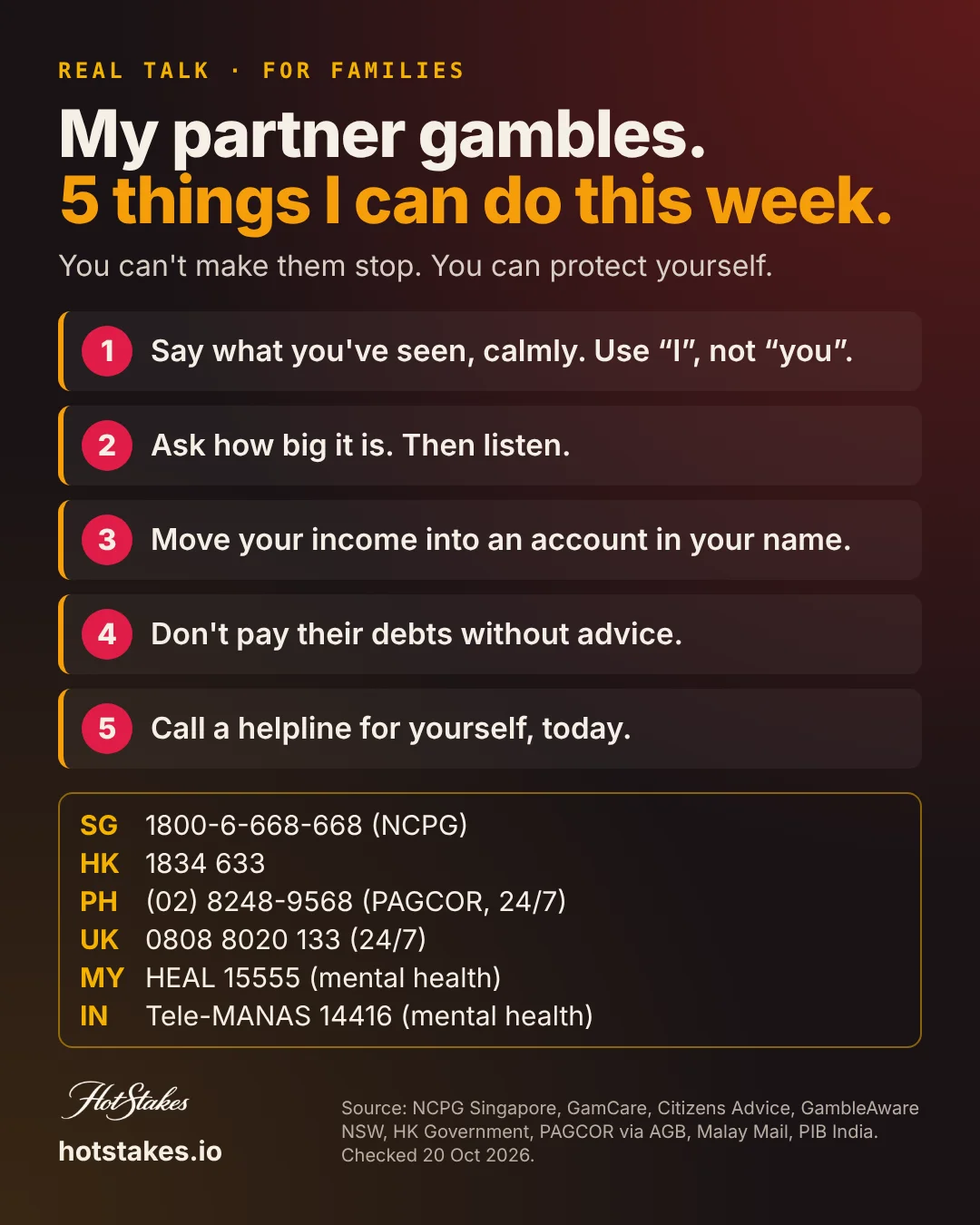
| Singapore | National Problem Gambling Helpline (NCPG) | 1800-6-668-668 | For you or your loved one; webchat too (NCPG) |
| Hong Kong | Gambling counselling hotline | 1834 633 | Funded centres also serve family members (HK Government) |
| Philippines | National Problem Gambling Helpline (PAGCOR) | (02) 8248-9568 | 24/7, launched May 2026, for gamblers and families (AGB, GGRAsia) |
| Malaysia | HEAL (Ministry of Health, mental health) | 15555 | Not gambling-specific (Malay Mail) |
| Malaysia | Befrienders KL | 03-7627 2929 | 24 hours, emotional support (Befrienders) |
| India | Tele-MANAS | 14416 | 24×7 mental-health line, not gambling-specific (PIB) |
| UK | National Gambling Helpline (GamCare) | 0808 8020 133 | 24/7, free, for anyone worried about someone else’s gambling (GambleAware) |
If anyone is in immediate danger or talking about ending their life, call your local emergency number now. More Real Talk guides are in our Real Talk section.
Takeaway: Save the number for your country in your phone today, before the next crisis.
FAQ
How do I know if my husband’s gambling is a problem?
NCPG lists signs such as betting more than planned, chasing losses, lying about gambling, missing family commitments, failed attempts to cut down and growing debt. If several fit, talk to a gambling helpline. You don’t need to be certain first.
Should I pay off my partner’s gambling debts?
Not without advice. Citizens Advice says you are only responsible for debt in your name, while joint debts are shared. A loan taken in your name without permission is fraud and should be reported to the lender and police.
Can I put a gambling block on my partner’s bank card?
Usually not. GamCare says you can’t set a bank gambling block for someone else unless you hold power of attorney, and each joint account holder sets their own. You can protect accounts in your own name.
Can I stop my spouse from entering casinos in Singapore?
Yes, you can apply. NCPG’s Family Exclusion Order lets spouses, children, parents and siblings apply to bar a family member from Singapore’s casinos, private-club jackpot rooms and Singapore Pools accounts if their gambling has seriously harmed the family.
Is there a gambling helpline in Malaysia?
We could not verify a dedicated national gambling helpline in Malaysia on 20 Oct 2026. The Ministry of Health’s HEAL line (15555) and Befrienders KL (03-7627 2929, 24 hours) offer emotional support for anyone, including family members.
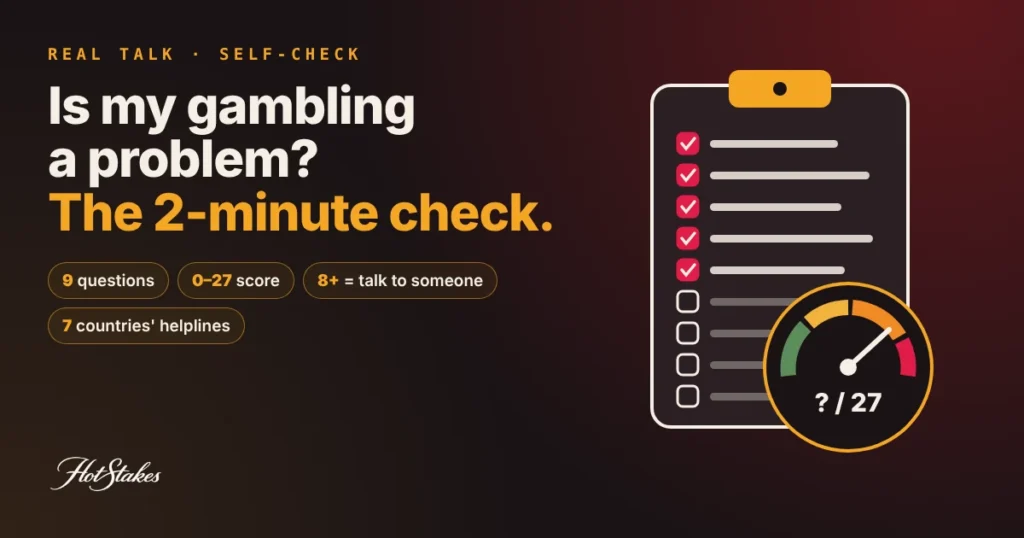
Your partner may want to try this 2-minute gambling self-check on their own.
HotStakes is an independent directory. Some links on this site are affiliate links; we may earn a commission at no cost to you, and it never changes our rankings. Gambling involves risk — only play with money you can afford to lose, and if it stops being fun, seek help. This article is general information, not legal advice.
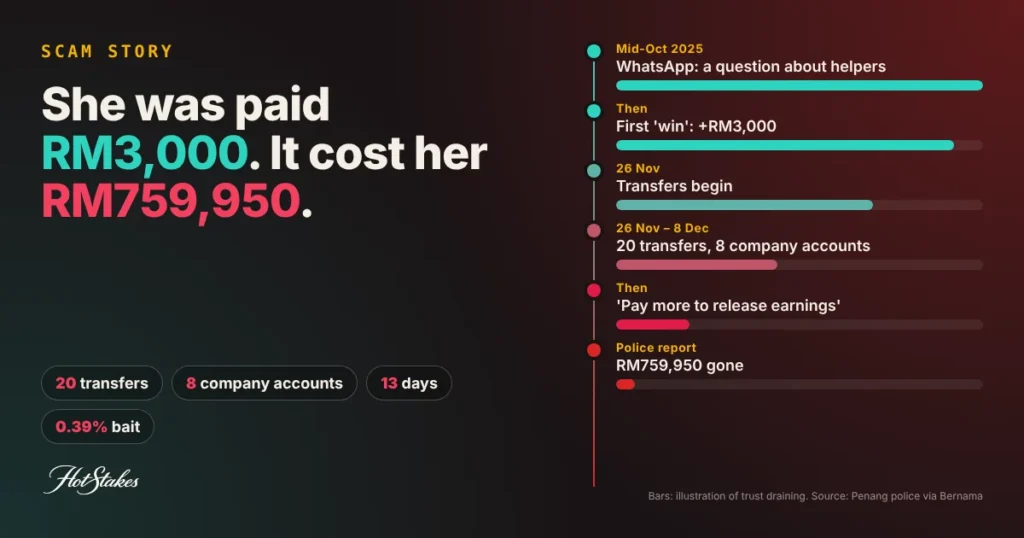 Next story →Fake Casino Investment Scam: How a Penang Agent Lost RM760K


Start the discussion