

Anjouan Gaming Licence Explained: What It Really Protects
Why so many new casinos carry an Anjouan gaming licence, why Comoros disputes it, and what it does (and doesn't) protect for players.
In this article
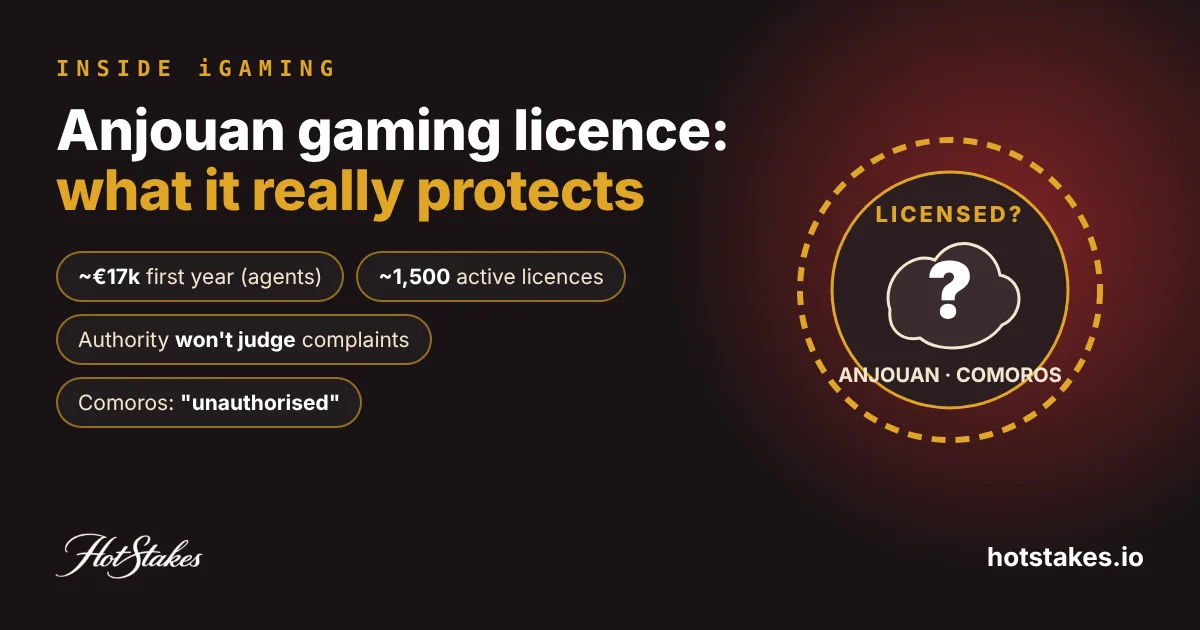
An Anjouan gaming licence is an online gambling permit sold in the name of Anjouan, one of the three islands of the Union of the Comoros. It is cheap (about €17,000 a year, as advertised by agents) and fast (weeks, not months), which is why so many new crypto casinos show its seal. But in October 2026 the Comoros government itself called the regime unauthorised and asked Britain for help investigating it. For players, the licence promises an ADR route and little else: the authority says it does not handle player complaints.
What is the Anjouan gaming licence?
Anjouan is a small island in the Indian Ocean, part of the Union of the Comoros. It tried to break away in 1997. According to ABC News, the separatist government then created the Anjouan Offshore Finance Authority (AOFA) to license offshore banks and other firms.
Today, licences are marketed under the name “Anjouan Gaming”. Its website calls itself the regulator for internet gaming on the “Autonomous Island of Anjouan” and says it operates under the AOFA’s authority. Anjouan Licensing Services Inc. is named as the “sole authorised licence administrator”.
The legal basis it claims
- The law: the Computer Gaming Licensing Act 007 of 2005, an Anjouan island law, as Asia Gaming Brief and the authority’s own pages describe.
- The authority’s case: its recognition page cites the 2001 Comoros Constitution, four 2005 island statutes, and a legal opinion from an unnamed law firm that found the laws “valid and operative”.
- The doubts: researchers Steve Menary and Marko Begović noted that the copy of the 2005 Act online was “unsigned or stamped”. ABC reports that Comoros banking laws in 2013 and 2015 removed the AOFA’s status as a recognised regulator.
Takeaway: the licence rests on a 2005 island law whose standing the national government disputes.
Why so many new online casinos carry it
Price and speed. Curaçao’s new gaming law (the LOK) took effect on 24 December 2024. Under it, a B2C licence now costs US$55,000 a year in fees, plus tighter checks. Operators who liked the old, cheap Curaçao sub-licence looked elsewhere. Asia Gaming Brief reported in 2024 that Anjouan was marketing itself “in the wake of the Curacao changes”. Our Curaçao licence reform explainer covers what changed there.
| Item | Figure | Who says so |
|---|---|---|
| First-year licence cost | About €17,000 | Advertised by agents (Tetra Consultants); same figure in ABC’s reporting |
| Annual renewal | About €13,300 | Advertised by agents (Tetra Consultants) |
| Processing time | 2 to 8 weeks | Advertised by agents; 2 to 3 weeks per Asia Gaming Brief |
| Gaming tax | 0% | Asia Gaming Brief; Menary and Begović study |
| Licences issued | More than 1,650, close to 1,500 active | Anjouan Gaming, 14 Jul 2026 (self-reported) |
| Curaçao B2C, for comparison | US$55,000 a year | Curaçao Gaming Authority guidance, Oct 2025 |
The growth is steep. The Menary and Begović study counted 825 active Anjouan licences in mid-2025. The authority’s own figure a year later is close to 1,500.
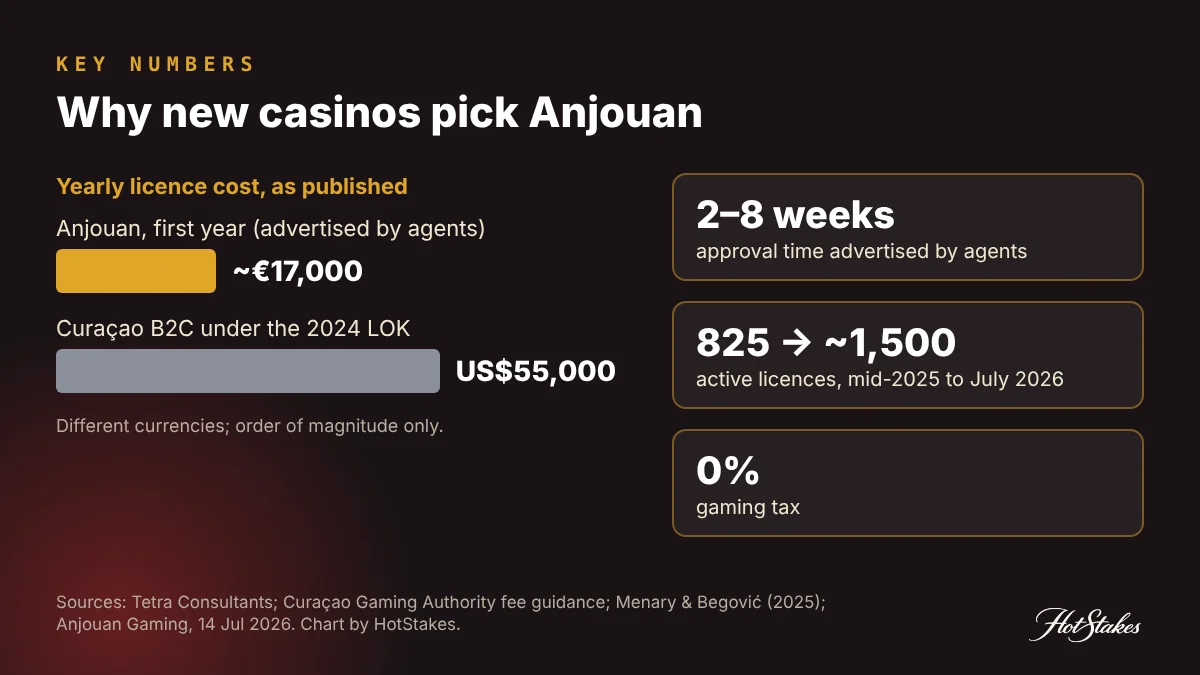
Takeaway: Anjouan wins on cost and speed, not on player protection.
The fight over who is allowed to issue it
This is the part most licensing-agent guides leave out. Two sides tell opposite stories.
What the Comoros authorities say
- A 2023 Central Bank of the Comoros statement called several Anjouan regulators and licence sellers “fictitious structures”, according to ABC News. A former Comoros attorney-general told ABC that Anjouan Licensing Services is “an illegal entity”.
- On 19 October 2026, The Guardian reported that the Comoros government had asked the UK for help. It says British citizens were identified “in connection with the unauthorised licensing regime”, as Gambling.com reported. The central bank called it activity by people “abusively using the name of the Comoros Islands”.
- These are allegations. As of 30 October 2026 we found no public court ruling, and the UK Treasury declined to comment.
What Anjouan Gaming says
- It says its licences are legally valid, citing a 2024 legal opinion reconfirmed in 2026. It has not named the law firm or published the opinion, Casino.org reports.
- In June 2026 it said its licence is “not … a universal authorization” and cannot override other countries’ laws.
Other regulators act on that point. Michigan’s gaming board sent cease-and-desist letters to offshore sites based in jurisdictions including “the Autonomous Island of Anjouan” in April 2025.
Takeaway: even if the licence is valid on Anjouan, it is not permission to serve you.
What we found on the Anjouan register on 30 Oct 2026
We opened the Anjouan Gaming register, verification page, complaint policy, ADR list and notices on 30 October 2026. Here is what a player can and cannot learn.
- Search works by licence number, company name or domain. The verify page says results show the registered name, licence number, type (B2C or B2B) and status.
- The full licence register has columns for company, status, licence number, type, issue date, expiry date and domains. When we opened it in a browser on 30 Oct 2026, the counter read “1258 of 1258 licences”, shown 25 to a page. It lists no owners, addresses or complaint records.
- No owners, no addresses, no complaint history. Nothing tells you who is behind a company or how it treats players.
- It is not an endorsement. The page says verification “does not constitute an endorsement” and that data is “updated periodically”.
- Enforcement is thin in public. The notices page showed two licence terminations (undated) and amended licence conditions dated September 2026. There was no statement responding to the Comoros government.
- Two bodies have claimed the role. The Menary and Begović study notes that a separate “Gaming Control Anjouan” site also called itself the regulator. That confusion makes look-alike seals and domains harder to spot.
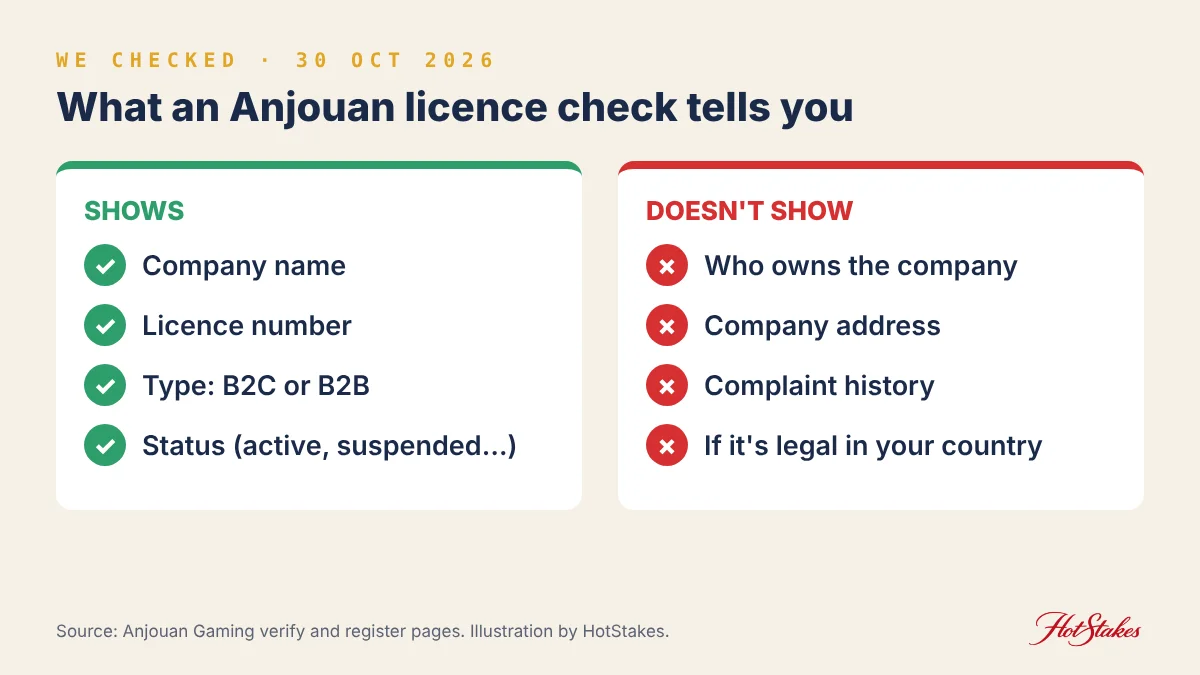
Takeaway: a match on the register proves a registration exists, nothing more.
What protection does a player actually get?
The complaint policy is clear that the authority “does not handle, mediate, or adjudicate player complaints”. Here is the route it sets out:
- Complain to the operator through its site seal. Game disputes within 14 days; payment, bonus or account disputes within 30 days.
- The operator has 30 days to answer.
- If it doesn’t fix it, go to one of four approved ADR providers. The operator pays the ADR fee.
- Write in English. The policy says complaints in other languages won’t be considered.
Two more gaps matter. There is no central self-exclusion: the responsible gaming page says you must ask each operator separately. And complaints from excluded territories are outside the scheme, so if the site shouldn’t be serving your country, you may have no route at all.
Takeaway: on paper there is ADR. In practice, the authority is not your referee. Our casino complaint guide covers what to do when ADR fails.
Anjouan vs Curaçao vs Malta vs PAGCOR
| Point | Anjouan | Curaçao (LOK) | Malta (MGA) | Philippines (PAGCOR) |
|---|---|---|---|---|
| Regulator type | Island authority (AOFA / Anjouan Gaming); national government disputes it | Curaçao Gaming Authority, under a national law in force since Dec 2024 | EU-member state regulator | Government-owned corporation that both regulates and runs its own casinos |
| Public register | Yes; name, number, type, status, domains | Yes; says it does not guarantee current validity | Licensee register | “PAGCOR Guarantee” list of licensed platforms |
| Player complaints | Operator, then private ADR; authority won’t adjudicate | Operator, then ADR; regulator won’t intervene in individual disputes | Operator first, then the MGA’s Player Support reviews cases | State regulator oversees licensees; steps in our PAGCOR licence check guide |
| Language of complaints | English only | English plus the site’s languages | English or Maltese | Not stated on the pages we checked |
| Self-exclusion | Per operator only | Operator must resolve breaches in 5 business days | Operator tools; MGA self-barring for land casinos | Not stated on the pages we checked |
| Cost, as published | ~€17,000 first year (agents) | US$55,000 a year (B2C) | €25,000 a year + €5,000 application | 30% of gross gaming revenue for e-games |
| Who it may serve | No territory set; operator must obey local law | Offshore markets; local law still applies | Malta and markets that accept it; local law still applies | Players in the Philippines |
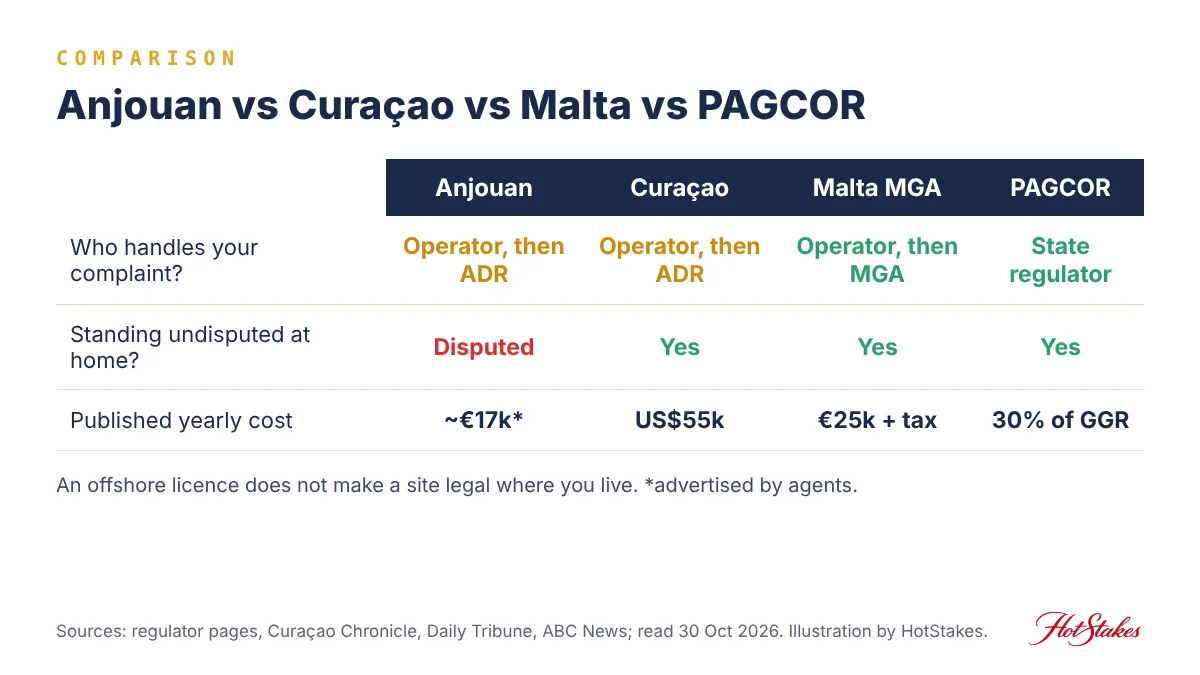
Takeaway: no offshore licence makes a site legal in your country by itself. Anjouan just has the least behind it.
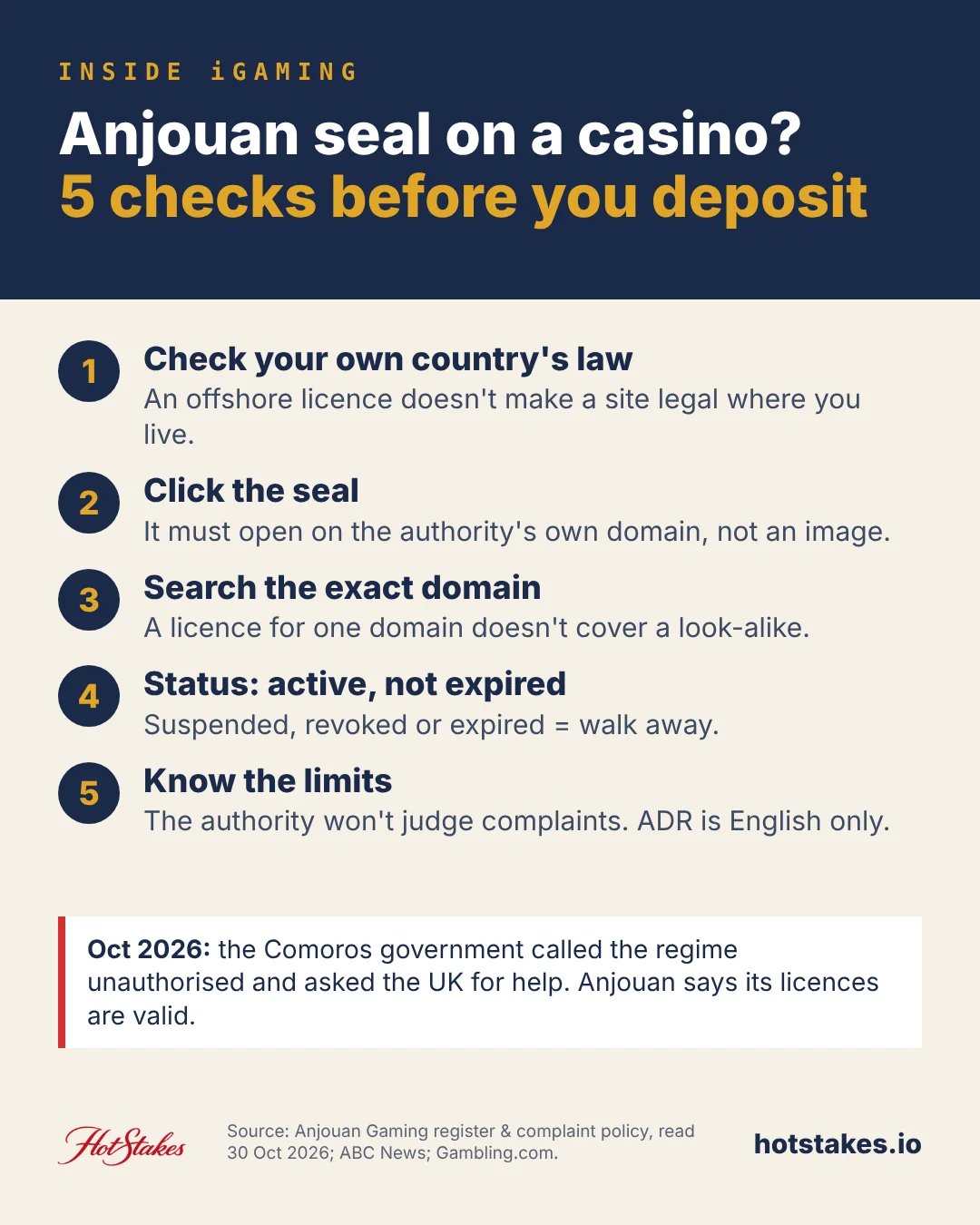
How to check an Anjouan licence claim from Asia
- Check your own country first. In much of Asia, online casinos are illegal whatever licence they hold. Use our is it legal checker or the Asia legality guide.
- Click the seal in the site footer. It should open a page on the authority’s own domain, not a picture or a look-alike URL.
- Search the register by the exact domain you are on. A licence for “brand.com” does not cover “brand-asia.com”.
- Confirm the status reads active and the expiry date is in the future.
- Run the site through our licence check tool and our list of unlicensed casino warning signs.
- Screenshot the seal, register result and terms before you deposit. You will need them for any complaint.
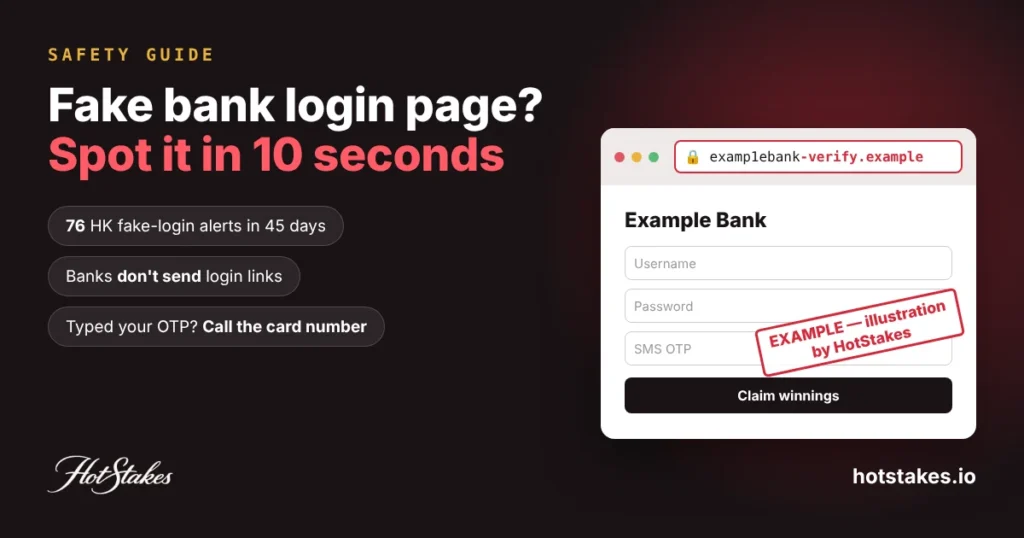
Paid a site that now won’t pay out, or asks for a “release fee”? Stop paying and report it: Malaysia NSRC 997 (24 hours), Singapore ScamShield 1799, Hong Kong ADCC 18222. Other countries are on our scam help page.
Takeaway: verify the domain, then ask whether any licence could protect you where you live.
FAQ
Is an Anjouan licence legit?
It is disputed. Anjouan Gaming says its licences are valid under a 2005 island law. The Comoros central bank and government call the regime unauthorised and, in October 2026, asked the UK for help investigating it. No court has settled it publicly.
Why do so many new crypto casinos have an Anjouan licence?
It is cheap and quick. Agents advertise about €17,000 for the first year and approval in two to eight weeks, against US$55,000 a year for a Curaçao B2C licence since the 2024 reform.
Can I complain to the Anjouan regulator if a casino won’t pay?
Not directly. Its policy says it does not handle or adjudicate player complaints. You complain to the operator first, then to an approved ADR provider, in English.
Anjouan vs Curaçao licence: which is safer for players?
Curaçao’s new LOK regime has a nationally backed regulator and set complaint deadlines. Anjouan’s standing is disputed by its own national government. Neither regulator decides individual disputes.
Does an Anjouan licence make a casino legal in my country?
No. Anjouan Gaming itself says its licence is not a universal authorisation and cannot override local law. Check your country’s rules before playing.
HotStakes is an independent directory. Some links on this site are affiliate links; we may earn a commission at no cost to you, and it never changes our rankings. Gambling involves risk — only play with money you can afford to lose, and if it stops being fun, seek help. This article is general information, not legal advice. Read our full disclaimer.
 Next story →Lend Money to Someone Who Gambles? What 10 Guides Say
Start the discussion