

Can Tether Freeze USDT? How It Works and How to Avoid It
Yes, Tether can freeze USDT at any address, even in your own wallet. Who can freeze what, the 2026 numbers, and how to avoid tainted USDT.
In this article
- How a Tether freeze works: the blacklist inside USDT
- How much USDT has Tether frozen? The official numbers
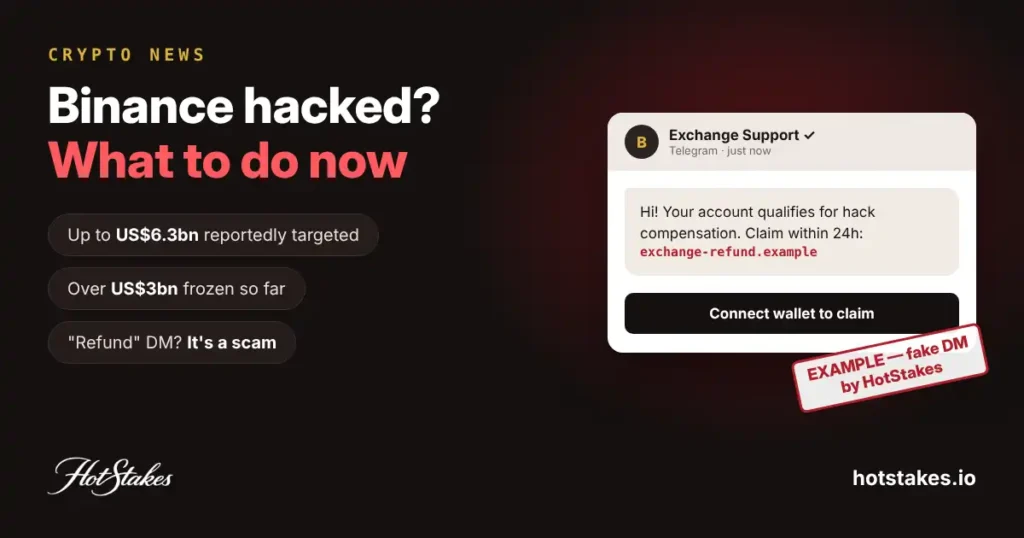
- The 2026 freezes: the Binance hack and others
- Who can freeze what: the three kinds of freeze
- How to avoid receiving tainted USDT: 8 checks
- USDT frozen? Your first 5 steps
- Where to report (verified 6 Nov 2026)
- FAQ
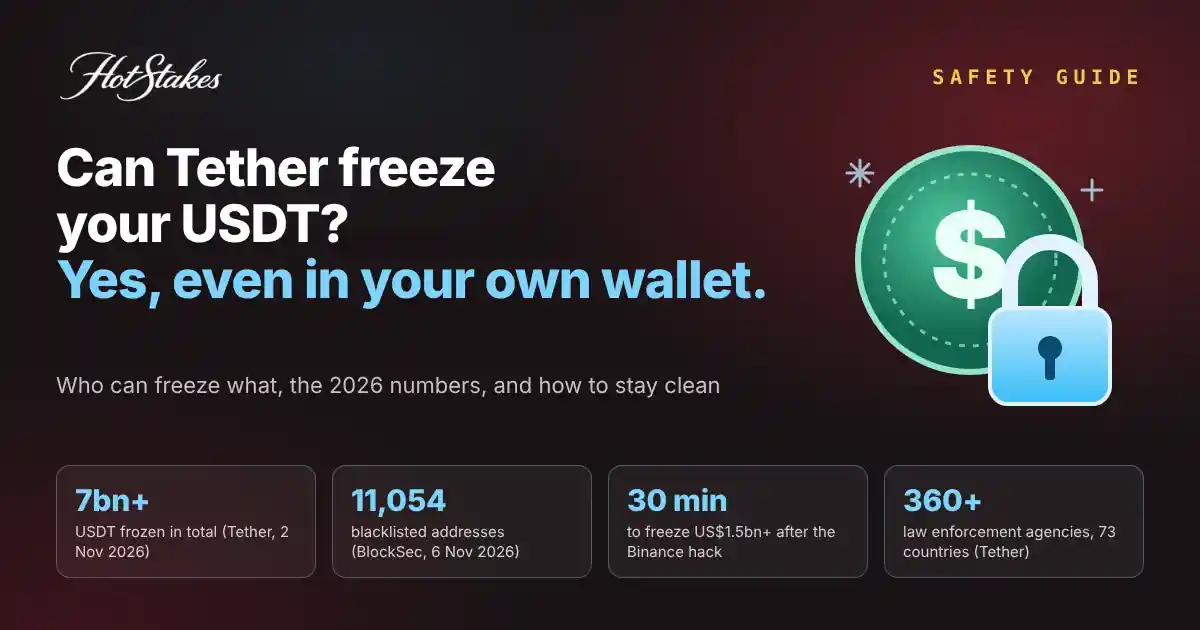
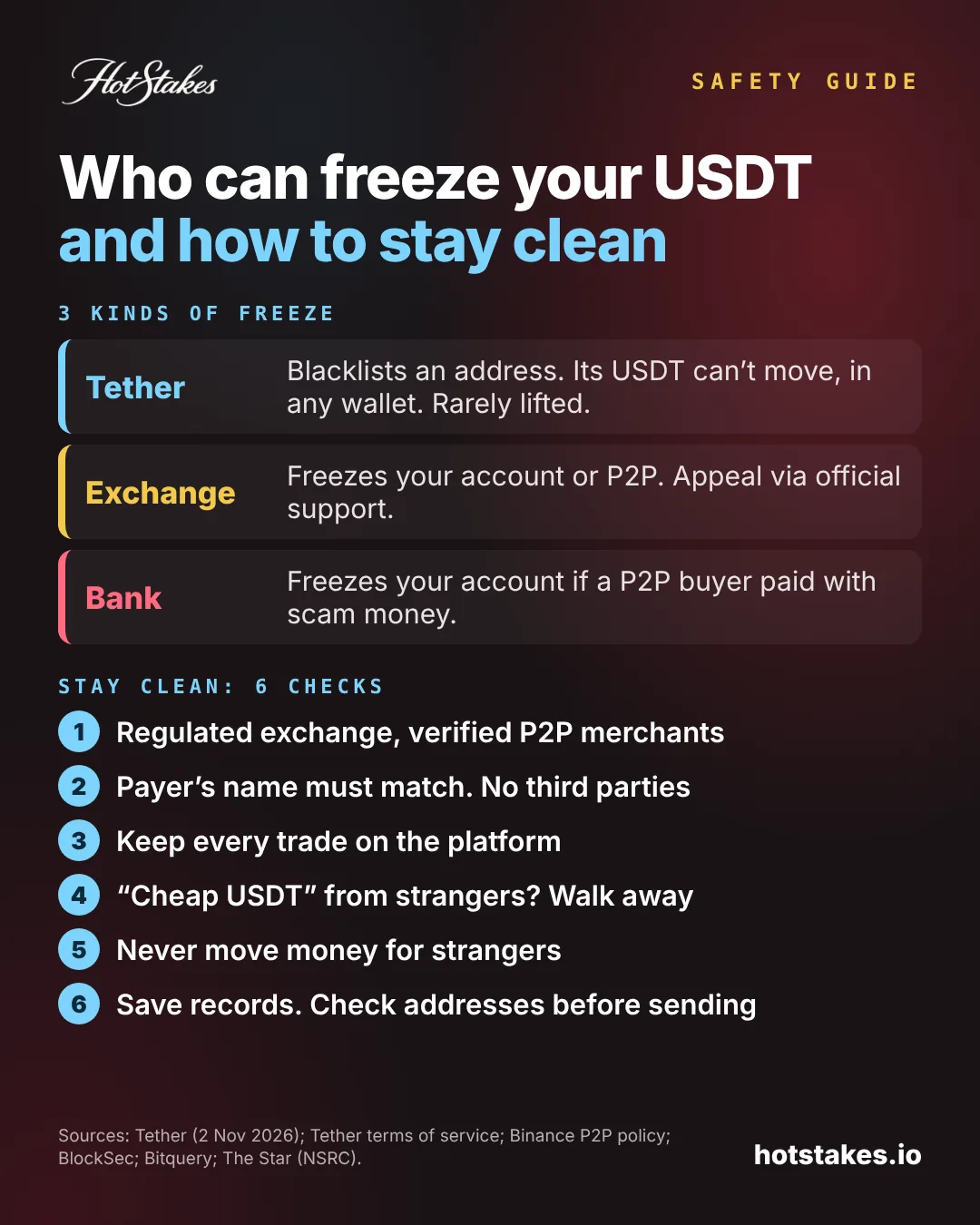
Yes. Tether can freeze the USDT at any address on Tron or Ethereum, even in your own wallet, because the freeze switch sits inside the USDT token contract. Tether says it has frozen more than 7 billion USDT and works with more than 360 law enforcement agencies in 73 countries, so a freeze is a real risk, not a theory. For most players, though, the freeze that actually bites comes from an exchange or a bank after a P2P trade with dirty money. Below: how each freeze works, the 2026 numbers, and how to stay clean.
How a Tether freeze works: the blacklist inside USDT
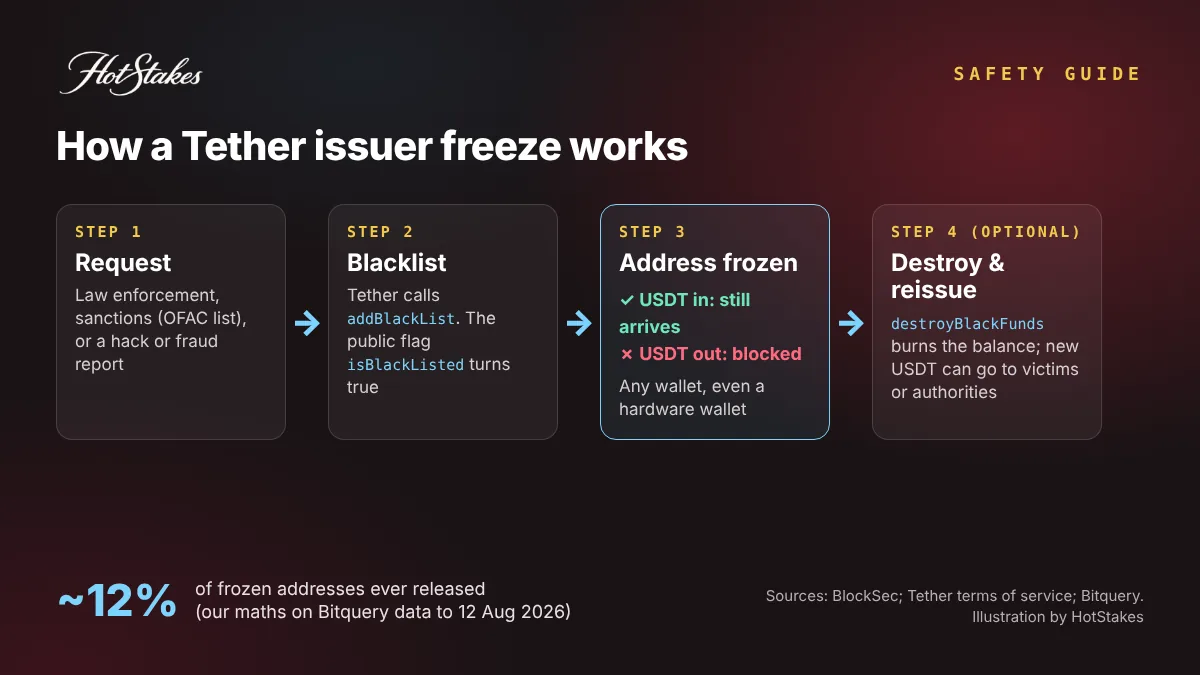
USDT is a token issued by one company, and its code on Ethereum and Tron gives the issuer an off switch for individual addresses. BlockSec’s USDT freeze guide walks through the contract code. In plain English:
- Blacklist. Only the contract owner (Tether) can call a function named
addBlackList. It flips a public flag,isBlackListed, to “true” for that address. - Freeze. From then on the contract refuses to move USDT out of that address. The coins still show in the wallet, but they can’t be sent, swapped or spent.
- Destroy and reissue. For an address that is already blacklisted, Tether can call
destroyBlackFundsto burn the balance. It often then issues the same amount of new USDT to a victim or to a wallet named by the authorities.
Tether’s own terms of service (last updated 26 February 2026) spell out the right to “freeze any Tether Tokens held by you” and to blacklist “any Digital Tokens Address which holds Tether Tokens”. Its FAQ adds that Tether may “seize and destroy Tether Tokens remotely, in response to demands from government, law enforcement”.
One detail catches people out. A blacklisted address can still receive USDT. Incoming transfers go through; the coins just get stuck. Bitquery’s blacklist audit (13 August 2026) counted US$918,116,081 paid into addresses after they had already been frozen.
Takeaway: Your keys don’t protect you here. If Tether blacklists an address, the USDT in it is stuck no matter which wallet holds it.
How much USDT has Tether frozen? The official numbers
Tether publishes running totals in its press releases. The figures grew fast in 2026:
- 23 April 2026: Tether said it works with more than 340 law enforcement agencies across 65 countries, had supported more than 2,300 cases and had frozen more than US$4.4 billion in total.
- 2 November 2026: after the Binance hack, Tether said it “has frozen more than 7 billion USD₮ in secondary market addresses” and “works with more than 360 law enforcement agencies across 73 countries”. It says about 1.2 billion USDT taken through fraud and theft has been returned to owners and law enforcement through reissuance.
The same release says Tether “applies a wallet-freezing policy aligned with OFAC’s Specially Designated Nationals (SDN) List”, the US sanctions list. These are Tether’s own figures; we could not audit them.
What we saw on 6 Nov 2026
We opened BlockSec’s public USDT Freeze & Blacklist Checker on 6 Nov 2026. Its live snapshot (last updated 13:08 UTC) showed:
- 11,054 unique Ethereum and Tron addresses on Tether’s USDT blacklist.
- US$7.79 billion in USDT held by those addresses.
The page itself warns that its figures “may be delayed”. It lines up with Tether’s “more than 7 billion” claim. We also tried to view the contract source on Etherscan and Tronscan; the pages did not render the code for us, so we rely on BlockSec’s published code walk-through above.
Our maths: how often do frozen addresses get released?
We ran three sums on 6 Nov 2026 using Bitquery’s audit (data to 12 August 2026) and the BlockSec snapshot:
- 1,303 released ÷ 11,045 frozen addresses ≈ 12% ever taken off the blacklist, all time.
- 2,434 destroyed ÷ 11,045 ≈ 22% had their balance burned.
- US$7.79bn ÷ 11,054 addresses ≈ US$705,000 per frozen address on average. A few huge freezes skew this; most frozen addresses hold far less.
BlockSec’s own “why is my USDT frozen” guide gives a lower figure for recent cases: only about 3.6% of addresses blacklisted in 2025 were removed, with a median wait of 18.2 days for those that were. The two numbers measure different periods, but both point the same way.
Takeaway: Roughly nine in ten frozen addresses stay frozen. Plan as if a Tether freeze is permanent.
The 2026 freezes: the Binance hack and others
The biggest freeze this year followed the 29 October Binance hack. The numbers differ by source, so here they are side by side:
- Tether: froze “more than $1.5 billion in USD₮ within 30 minutes” (Tether, 2 Nov 2026). The release says the FBI attributed the hack to North Korea.
- The Sun Malaysia: reported about US$1.6 billion frozen by Tether and more than US$800 million in USDC frozen by Circle, citing the two firms’ chiefs (The Sun, 30 Oct 2026).
- Bitquery, via CryptoSlate: estimates about US$1.76 billion of stolen USDT was frozen and about US$729 million got away, partly because some wallets were emptied or swapped before the freeze landed (CryptoSlate, 3 Nov 2026).
Other 2026 freezes show the pattern. In January Tether froze more than US$182 million on five Tron addresses after a “formal request from law enforcement authorities”. In April it froze more than US$344 million across two addresses with OFAC and US law enforcement.
Freezes can be contested. In September, Decrypt reported that two Thai businessmen sued Tether in New York over about US$42.4 million in USDT frozen on ten Ethereum addresses. They allege the freeze came from an informal agent request without a warrant. Tether called the suit a “baseless attempt to interfere” with its law-enforcement work. These are allegations; no court has ruled on them.
Takeaway: Freezes now happen in minutes and at huge scale. Anyone who receives coins from a hacked or sanctioned source can end up holding frozen USDT.
Who can freeze what: the three kinds of freeze
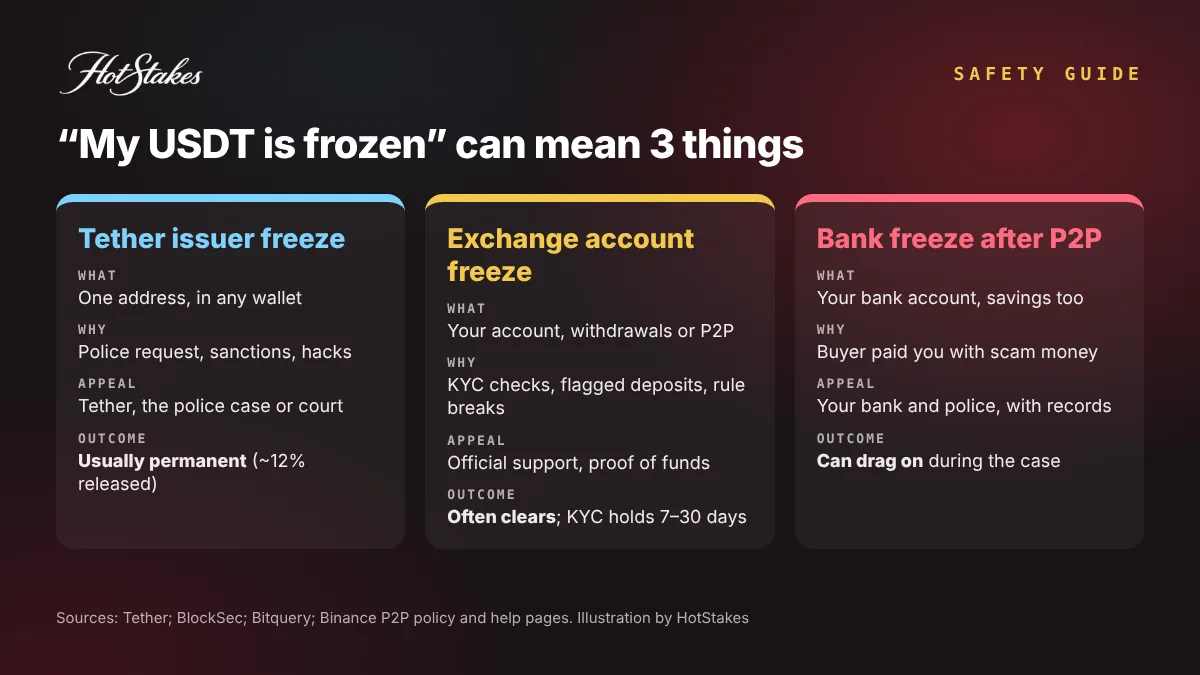
“My USDT is frozen” can mean three very different things. Working out which one you face decides who you call.
| Tether issuer freeze | Exchange account freeze | Bank account freeze after a P2P trade | |
|---|---|---|---|
| Who does it | Tether, through the USDT contract | The exchange (for example Binance) | Your bank, usually after a police or scam-centre report |
| What is frozen | Every USDT at one address, in any wallet | Your exchange account, withdrawals or P2P function | Your bank account, often including your own savings |
| Why | Law-enforcement request, sanctions (OFAC list), hacks and fraud (Tether) | KYC re-checks, flagged deposits, policy breaches, police requests (BlockSec; Binance P2P policy) | A buyer paid you with a scam victim’s money, and the victim reported it (Binance help page) |
| Can you appeal? | Only Tether can lift it: petition Tether, work through the police case, or go to court | Yes, through the exchange’s official support, with proof of source of funds | Yes, through your bank and the police, with full trade records |
| Typical outcome | Usually permanent: about 12% ever released (Bitquery data) | Many holds clear; BlockSec says KYC holds often take 7 to 30 days | Can drag on while the case is investigated |
The bank freeze is the one that hurts ordinary people most. Binance’s own help page says several P2P sellers had bank accounts frozen after trading with buyers who were later scammed, because the victims’ reports pulled in “innocent sellers” too. In Malaysia, The Star reported that the National Scam Response Centre “implemented freezing actions on 138,915 involved accounts” in the past year. If scam money lands in your account, you can be one of them, even if you didn’t know.
There is a fourth, sneaky case: your address is fine but the address you sent to is blacklisted. BlockSec notes the transfer goes through and the coins are stuck on the other side, and the sender usually has no standing to petition Tether.
Takeaway: Check which freeze you have before you panic. An exchange hold is often temporary; a Tether blacklist rarely is.
How to avoid receiving tainted USDT: 8 checks
You can’t control Tether. You can control where your coins and cash come from.
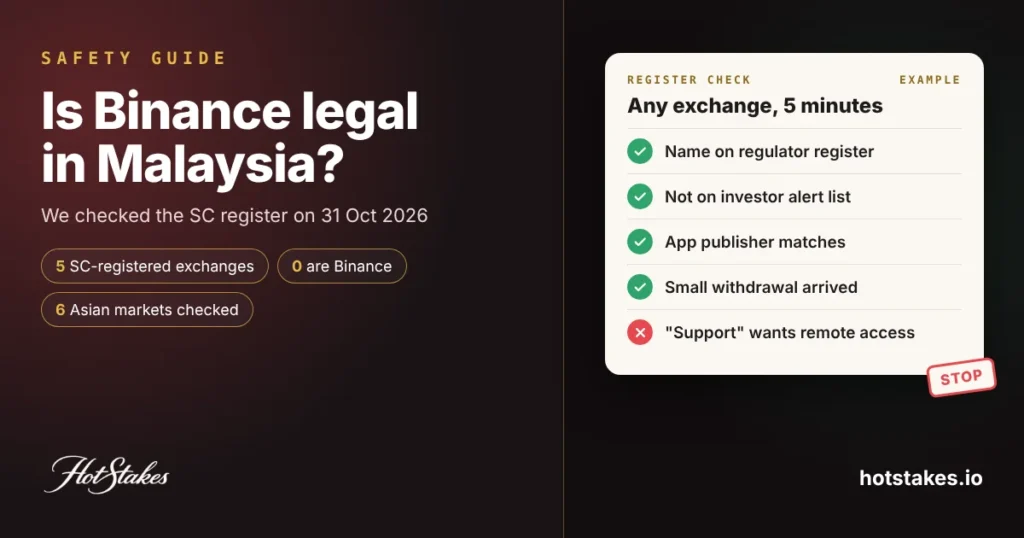
- Use a regulated exchange and its own P2P. Check the platform first with our guide to whether Binance is legal in Malaysia and how to check any exchange. Prefer verified merchants with long trade histories.
- Never accept third-party payments. Binance’s P2P policy says the payer’s bank account name must match their verified Binance name. If the name on the transfer doesn’t match, don’t release; contact P2P support through the app.
- Keep every P2P trade on the platform. Moving a deal to Telegram or WhatsApp “to save fees” removes the escrow and the appeal process.
- Skip “cheap USDT”. USDT below market price from a stranger is a classic sign of stolen or scam money. The discount is the bait.
- Don’t let strangers route money through you. Paying out someone else’s casino winnings, or “renting” your bank or exchange account, is how people become money mules. Read our money mule account explainer before you say yes to anyone.
- Check an address before you send to it. Paste the receiving address into a public tool such as the BlockSec freeze checker. Sending to a blacklisted address strands your coins.
- Keep records. Save order numbers, chat logs, bank slips and transaction hashes for every trade. They are your proof if anything gets frozen later.
- Deposit only with casinos you have checked. Our USDT casino deposit risks checklist covers the traps before you send, and our unlicensed online casino check helps you spot sites to avoid.
Takeaway: Clean source, matching names, on-platform trades, saved records. That covers most of the risk.
USDT frozen? Your first 5 steps
These steps draw on BlockSec’s freeze guide, Binance’s P2P bank-freeze page and the law firm EMM Legal’s guide to challenging Tether freezes:
- Find out which freeze it is. Paste your address into a freeze checker. “Frozen” means a Tether blacklist (yours, or the address you sent to). “Not frozen” means the problem sits with your exchange or bank.
- Stop and save everything. Don’t make more transfers. Screenshot balances, order IDs, chats, bank slips and transaction hashes.
- Use official channels only. For an exchange hold, open a ticket in the exchange’s app or website and supply proof of source of funds. For a bank freeze, call the number on your card and ask which report triggered it. For a Tether blacklist, contact Tether through its official site; EMM Legal says a direct approach to Tether is often the most efficient route, though Tether may be bound by a police or court order.
- Report to police if you were scammed. If a buyer, seller or “agent” tricked you, call your national scam line (table below). A police report also supports your appeal.
- Ignore anyone who offers to unfreeze it for a fee. “Recovery agents” target people right after a loss. Read our recovery scam explainer before you reply to anyone.
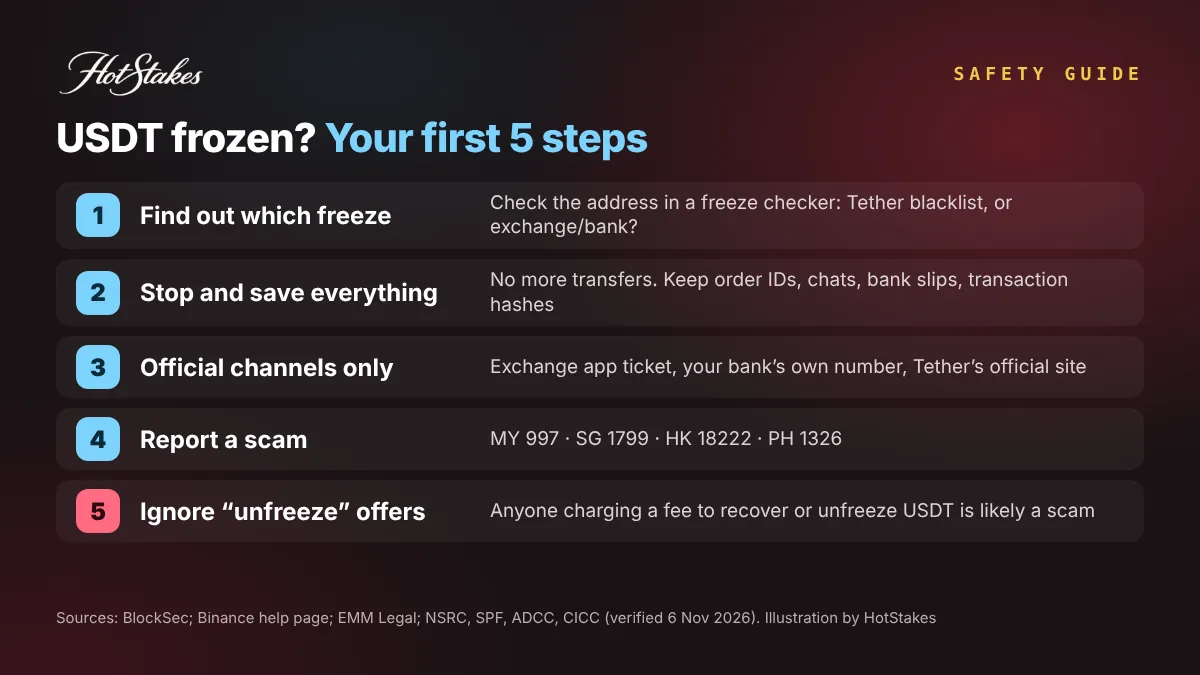
Takeaway: Identify, document, use official channels, report, and never pay a stranger to fix it.
Where to report (verified 6 Nov 2026)
We checked each number on the linked page on 6 Nov 2026. In an emergency, call your local emergency number.
| Country | Who | Number | Source |
|---|---|---|---|
| Malaysia | National Scam Response Centre (NSRC), 24/7 | 997 | The Star, 3 Mar 2026 |
| Singapore | ScamShield Helpline, 24/7 | 1799 | Singapore Police Force |
| Hong Kong | ADCC Anti-Scam Helpline, 24 hours | 18222 | ADCC |
| Philippines | CICC Inter-Agency Response Center (I-ARC), 24/7 | 1326 | PNA / Inquirer |
For other countries and step-by-step help, use our scam reporting tool.
Takeaway: Malaysia’s NSRC says it can act on freezing; report fast while the money can still be traced.
FAQ
Can Tether freeze USDT in my own wallet?
Yes. The freeze sits in the USDT contract on Ethereum and Tron, not in your wallet app. If Tether blacklists your address, the USDT there can’t move, whether it is in a mobile wallet, a hardware wallet or an exchange.
Why is my USDT frozen?
Usually one of four reasons: Tether blacklisted your address, the address you sent to is blacklisted, your exchange put a hold on your account, or a compliance check is pending. A freeze checker tells you whether it is a Tether blacklist; if not, ask your exchange.
How do I check if a USDT address is blacklisted?
The blacklist flag is public on-chain. Free tools such as the BlockSec USDT freeze checker read it for Ethereum and Tron addresses. Check before you send, not after.
Can I get frozen USDT back?
Sometimes, but the odds are low. Bitquery’s data suggests about 12% of frozen addresses were ever released, and BlockSec puts the 2025 removal rate at about 3.6%. Victims of fraud have a better chance through police, because Tether can reissue frozen funds to rightful owners.
My bank account was frozen after a P2P USDT sale. What now?
Contact your bank through its official number, file a police report with your full trade records, and contact the exchange’s P2P support with the order details. Binance’s help page advises working with your bank and local authorities and getting legal advice if needed.
HotStakes is an independent directory. Some links on this site are affiliate links; we may earn a commission at no cost to you, and it never changes our rankings. Gambling involves risk — only play with money you can afford to lose, and if it stops being fun, seek help. This article is general information, not legal advice. Read our full disclaimer.
 Next story →Thai Lottery 16 November 2026: Draw Time, Prizes and Odds
Start the discussion