

Is Lottery Prize Money Taxed? Asia’s Rules Compared
Lottery prize tax: 0% in Malaysia, Singapore and Hong Kong, 0.5% in Thailand, 20% in the Philippines. Worked examples and scam signs. 18+
In this article
- The short version, in one table
- Malaysia: prizes are paid in full
- Singapore: a windfall, with nothing to declare
- Hong Kong: the duty is on the lottery, not the winner
- Thailand: 0.5% stamp duty
- Philippines: 20% on prizes above PHP 10,000
- Cambodia: we could not confirm a rule
- What else can reduce a prize
- The “pay the tax first” scam
- FAQ
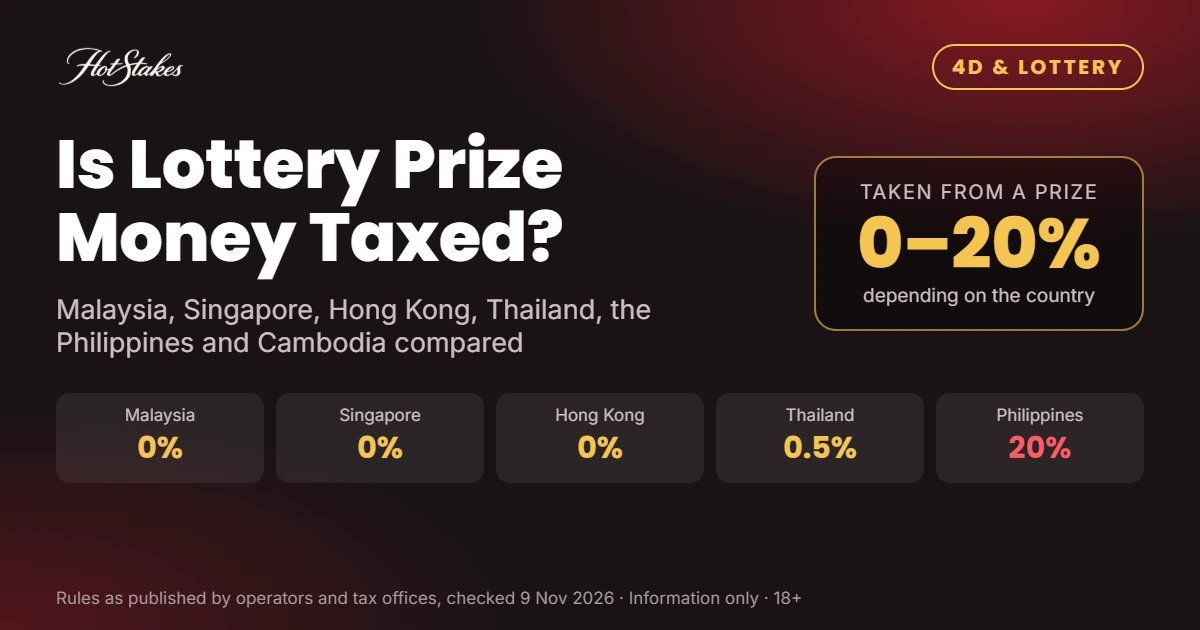
It depends on where the prize is paid. In Malaysia, Singapore and Hong Kong nothing is taken from a lottery winner’s prize. Thailand takes 0.5% stamp duty from Government Lottery prizes. The Philippines takes the most: 20% of any PCSO prize above PHP 10,000. We could not find a published official rule for Cambodia. Where a tax applies it is taken out of the prize before you are paid, so nobody genuine asks a winner to send money first. Claim periods and offices for 4D operators are on our how to claim page. 18+, information only, not tax advice.
The short version, in one table
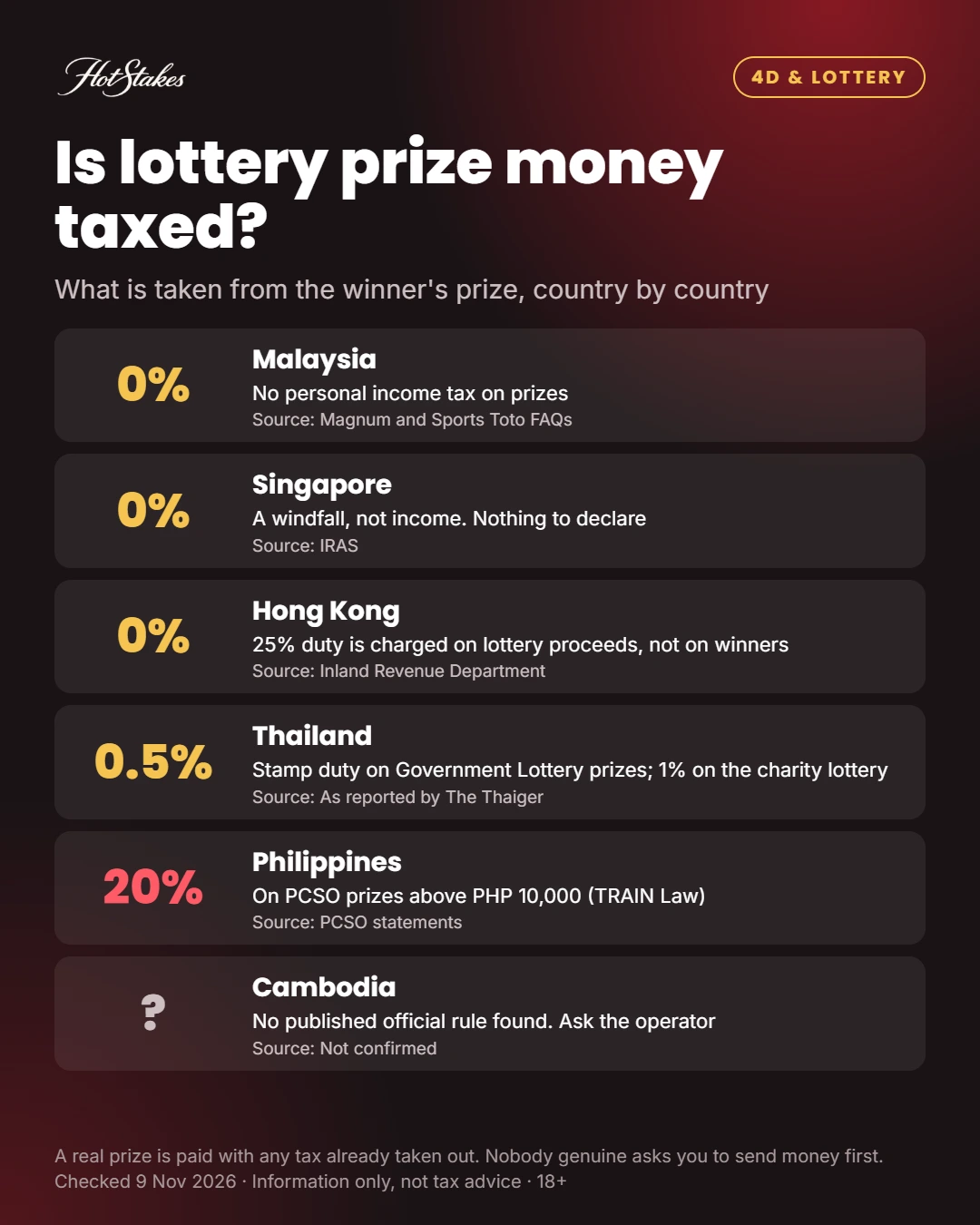
| Where the prize is paid | Taken from the winner | Who says so |
|---|---|---|
| Malaysia (Magnum, Da Ma Cai, Sports Toto and other licensed operators) | Nothing | Magnum and Sports Toto FAQs |
| Singapore (4D, Toto, Singapore Sweep) | Nothing | IRAS, the tax office |
| Hong Kong (Mark Six) | Nothing from the winner; a 25% duty is charged on the lottery’s proceeds | Inland Revenue Department |
| Thailand (Government Lottery) | 0.5% stamp duty; 1% on the charity lottery | The Thaiger, reporting the GLO’s rules |
| Philippines (PCSO games) | 20% of prizes above PHP 10,000 | PCSO statements, under the TRAIN Law |
| Cambodia | Not confirmed | No published official rule found |
This table is about the prize itself on the day it is paid. What you earn on the money afterwards, such as bank interest or rent, follows each country’s ordinary tax rules, and so does your position if you are tax resident somewhere else. For anything beyond the basics, ask a tax professional.
Malaysia: prizes are paid in full
Magnum’s help centre answers the question in one line: “All prizes are exempted from personal income tax”. The Sports Toto FAQ says the same about its own winnings. The reasoning has not changed in a long time: in a 2006 report in The Star, tax practitioners explained that money gained through luck or chance is treated as a windfall and not as income, including prizes from licensed 3D and 4D operators. That article is old, so treat the operators’ current FAQs as the working answer.
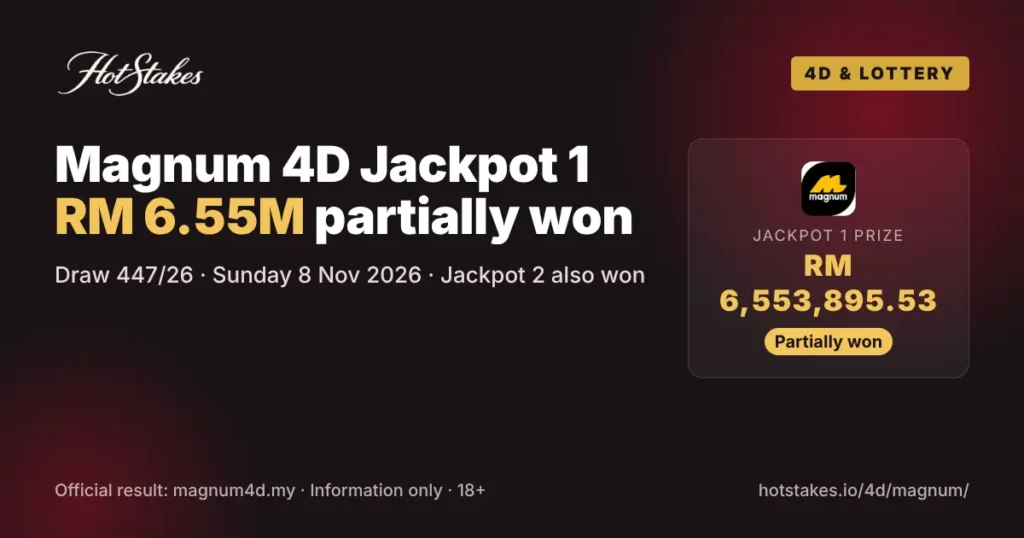
So the figure on the prize table is the figure paid. A Big-forecast first prize or a jackpot share is not reduced for income tax; the amounts per RM1 are on our 4D prize tables. What does reduce a jackpot is sharing. When more than one ticket wins, the pool is divided, as happened in the draw we covered in Magnum 4D Jackpot 1 partially won on 8 November. This applies to licensed operators only. A prize “won” with an unlicensed seller has no claim office and no rules behind it at all.
Singapore: a windfall, with nothing to declare
The Inland Revenue Authority of Singapore has a page for exactly this question. Its guidance on winnings from Toto, 4D and similar games says they are not taxable because they are “windfalls and not considered as an income”, and that winners do not need to declare them in a tax return.
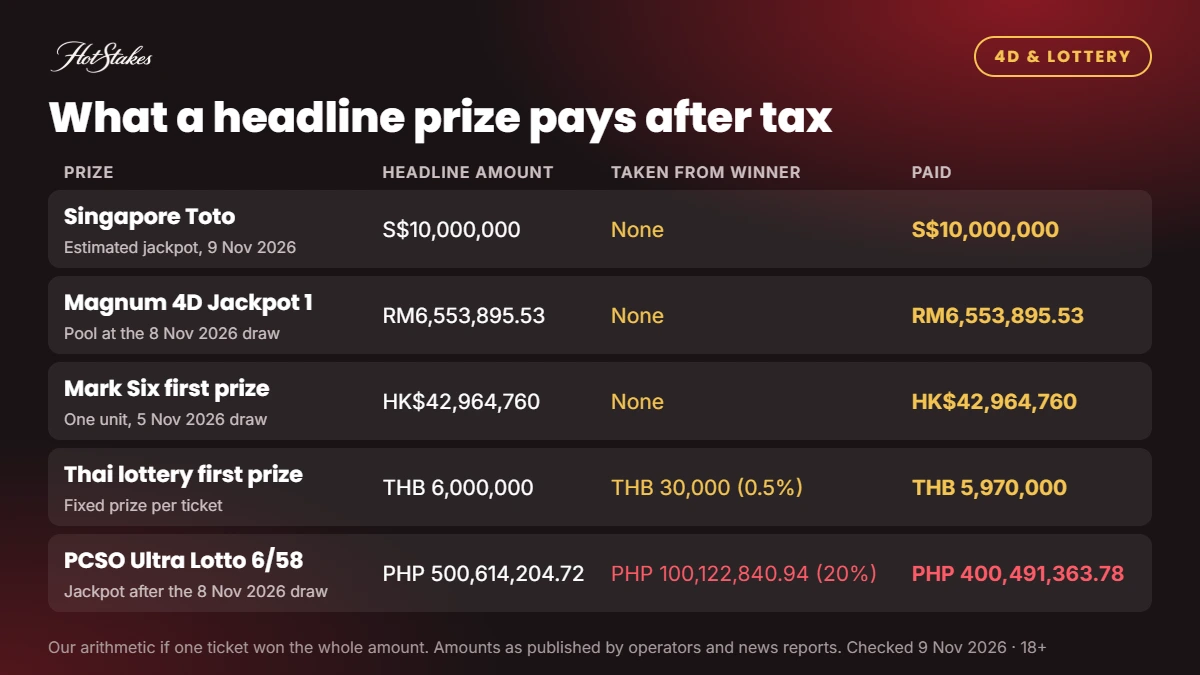
That is why the estimated S$10 million Toto jackpot for the 9 November 2026 cascade draw, reported by Mothership, is a S$10 million figure for whoever wins it, divided only by the number of winning shares. We explained the snowball and cascade rules in Singapore Toto jackpot snowballs to $10M, and Singapore 4D results are on our Singapore 4D page.
Hong Kong: the duty is on the lottery, not the winner
Hong Kong taxes the Mark Six at the source. The Inland Revenue Department’s betting duty page sets the duty on lotteries at 25% of the proceeds of lotteries run by an authorised company, and a 2023 government reply to the Legislative Council confirms the same rate and that the Hong Kong Jockey Club is the body authorised to run them. The IRD pages we read list no tax collected from a winner on the prize.
The dividend announced for each prize division is therefore the amount paid per unit. In the draw we covered in Mark Six HK$108M jackpot won, each full first-division unit was HK$42,964,760. The latest draw and its dividends are on our Mark Six results page.
Thailand: 0.5% stamp duty
Thai lottery prizes carry a small stamp duty. The Thaiger’s guide to what happens when you win the lottery in Thailand gives the rates as 0.5% on the Government Lottery and 1% on the charity lottery, and says winners of THB 20,000 or more must give a tax identification number to the Government Lottery Office.
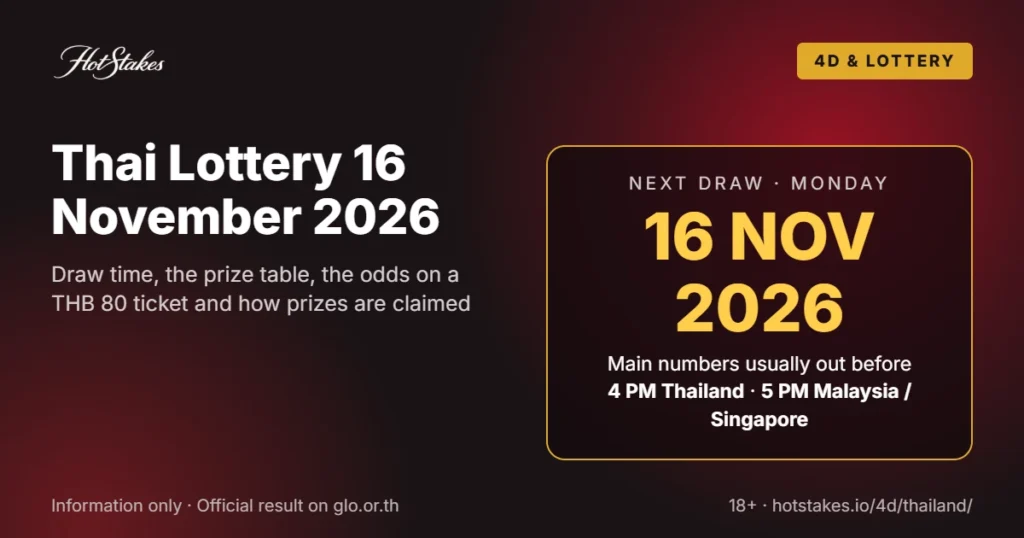
The first prize is a fixed THB 6,000,000 per ticket, so the duty on it is THB 30,000 and the payment is THB 5,970,000. That is our arithmetic, not a GLO statement. Cashing a smaller prize at a bank also carries a service fee, which is a charge and not a tax; the claim routes are set out in Thai Lottery 16 November 2026: draw time, prizes and odds. Every prize tier of each draw is on our Thai lottery results page.
Philippines: 20% on prizes above PHP 10,000
The Philippines is the one place on this list where tax changes a prize noticeably. The PCSO states that prizes of more than PHP 10,000 are subject to a 20% tax under the TRAIN Law, a line it repeats in its winner announcements, for example in the Daily Tribune’s January 2026 report. The tax has applied since 2018, when the Philippine Daily Inquirer reported that it covers lotto, keno, Small Town Lottery and sweepstakes prizes. Prizes of PHP 10,000 or less are paid in full.
The effect on a big jackpot is large. After the 8 November 2026 draw the Ultra Lotto 6/58 jackpot stood at PHP 500,614,204.72, according to GMA News. If a single ticket won that amount, 20% would be PHP 100,122,840.94 and the payment would be PHP 400,491,363.78. Again, this is our arithmetic. The draw itself is covered in Ultra Lotto 6/58 jackpot tops PHP 500M, and official PCSO results are on our Philippines lottery page.
Cambodia: we could not confirm a rule
Our live 4D results page carries Cambodian draws such as Grand Dragon, Perdana and 9 Lotto. We did not find a tax office page or an operator page that states what, if anything, is taken from a prize there, so we are not going to guess. If it matters to you, ask the operator’s office in writing before you claim.
What else can reduce a prize
Tax is only one of the things that sits between a headline number and a payment.
- Sharing. Jackpots in Toto, Mark Six, PCSO lotto and the Malaysian 4D jackpots are divided between winning tickets or units. A headline figure is the pool, not a promise to each winner.
- Fees. A bank or agent that cashes a ticket for you may charge for the service, as Thai banks do.
- Deadlines. An unclaimed prize is worth nothing. Sports Toto’s FAQ gives six months from the draw, after which the money goes to the Ministry of Finance. PCSO prizes must be claimed within one year or they are forfeited, according to the same Daily Tribune report. Periods for the other operators are on our how to claim page.
The “pay the tax first” scam
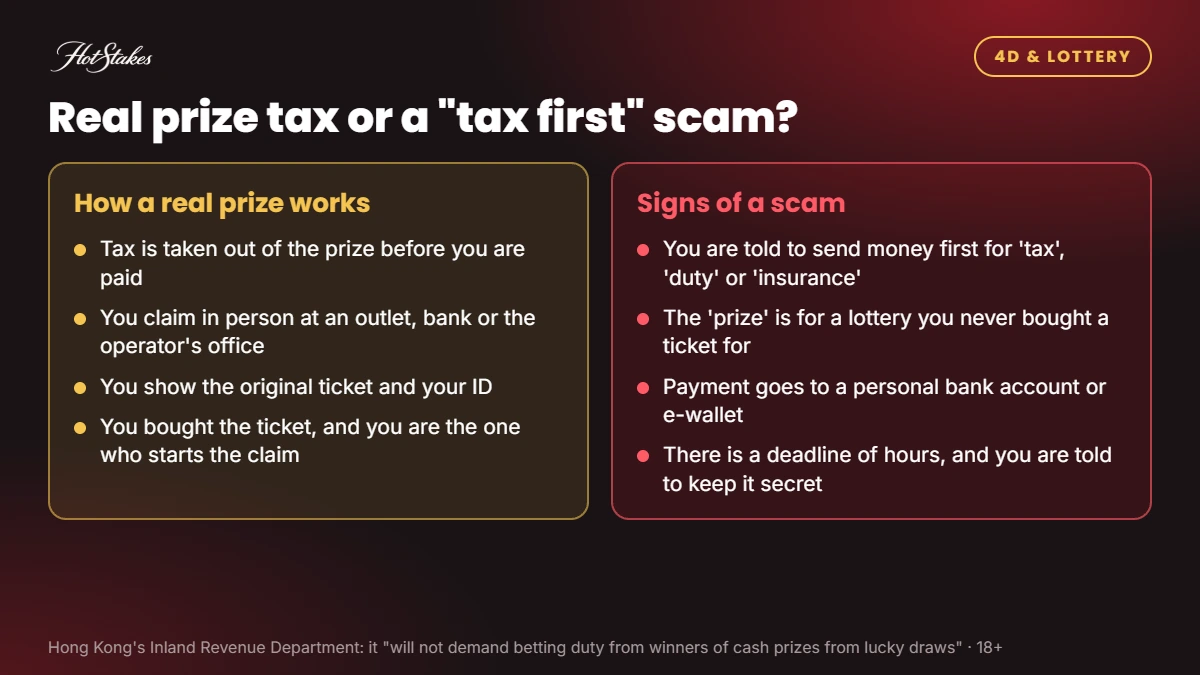
Knowing these rules is the best protection against one of the oldest tricks in the region: a message that you have won a prize and must pay “tax”, “duty” or “insurance” before it can be released. Hong Kong’s tax office addresses this in its betting duty FAQ, saying it will not demand betting duty from winners of cash prizes from lucky draws. The same logic holds everywhere on this page. A real operator pays the prize less any tax; it never needs your money to do it, and you cannot win a draw you did not enter.
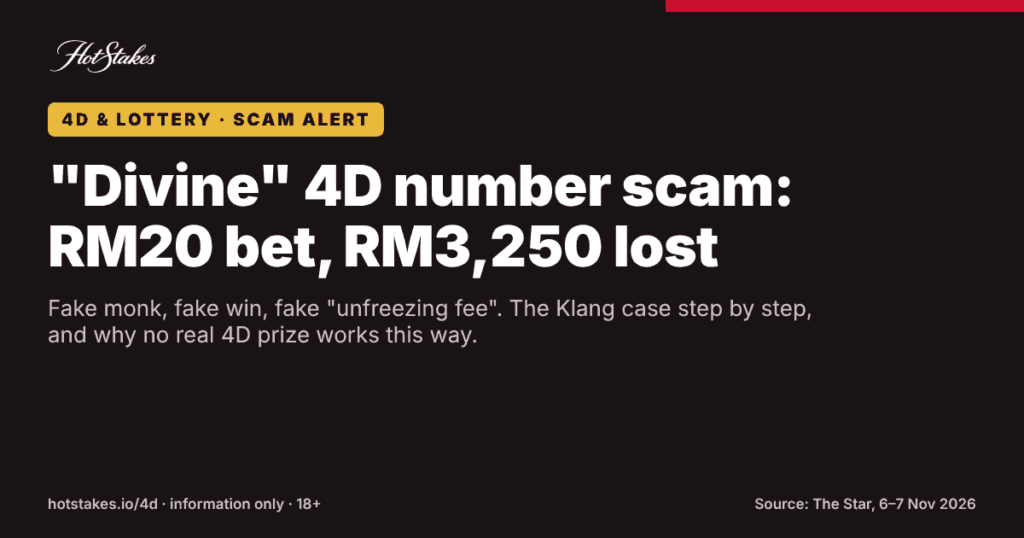
We have taken the script apart in Lucky Draw Scratch Card Scam: How It Works and in Fake 4D Number Scams: 2 Real Cases. If a message about a prize has reached you, our scam quiz takes two minutes.
Check results and your numbers
FAQ
Is 4D prize money taxed in Malaysia?
No. Magnum’s help centre says all prizes are exempt from personal income tax, and Sports Toto’s FAQ says its winnings are not taxable. The prize on the table is the prize paid.
Do I pay tax on Toto or 4D winnings in Singapore?
No. IRAS treats winnings from Toto, 4D and similar games as windfalls, not income, and says they do not need to be declared in a tax return.
How much tax is taken from a PCSO lotto jackpot?
20% of any prize above PHP 10,000, under the TRAIN Law. By our arithmetic a PHP 500,614,204.72 jackpot won by one ticket would pay PHP 400,491,363.78. Prizes of PHP 10,000 or less are paid in full.
Is the Thai lottery first prize taxed?
A 0.5% stamp duty is taken from Government Lottery prizes, as reported by The Thaiger. On the THB 6,000,000 first prize that is THB 30,000, leaving THB 5,970,000.
Someone says I must pay tax before my prize is released. Is that real?
No. Where a tax applies, it is taken out of the prize before payment. A request to send money first for tax, duty or insurance is a sign of a scam.
18+ only. This article is information only. It is not tax advice, a tip, a prediction or an invitation to buy tickets. Lottery, gambling and tax laws differ by country and can change; check the rules where you live. If gambling stops being fun, take a break and get help – see our disclaimer and responsible gambling note.
Last checked 9 November 2026.
HotStakes is an independent directory. Some links on this site are affiliate links; we may earn a commission at no cost to you, and it never changes our rankings. Gambling involves risk — only play with money you can afford to lose, and if it stops being fun, seek help. This article is general information, not legal advice.
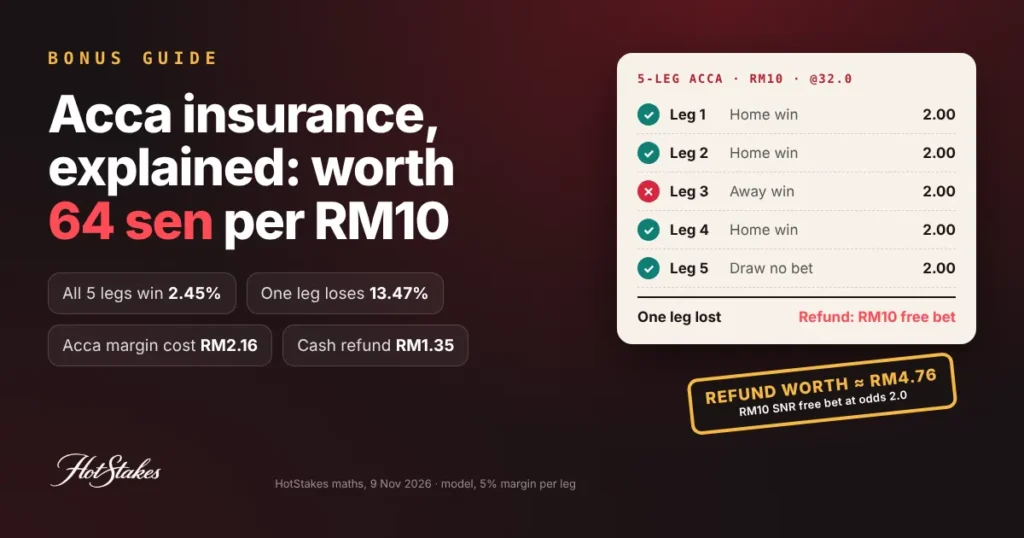 Next story →Acca Insurance Explained: What the Refund Is Worth

Start the discussion